Pages

Showing posts with label Early 19th Century. Show all posts

Wednesday, 7 October 2026

New YouTube video: The Russian protected cruiser Aurora

I have just uploaded a new YouTube video to the Wargaming Miscellany YouTube channel about the Russian protected cruiser Aurora.

It lasts approximately seven and three-quarter minutes.

The video can be found here on the Wargaming Miscellany YouTube channel.

Wednesday, 30 September 2026

New YouTube video: A visit to the site of the Wormoudt Massacre (28th May 1940).

I have just uploaded a new YouTube video to the Wargaming Miscellany YouTube channel about what I saw when I visited the site of the Wormoudt Massacre (28th May 1940).

It lasts just over four minutes.

The video can be found here on the Wargaming Miscellany YouTube channel.

Sunday, 6 September 2026

New YouTube video: The Artillery Museum in St Petersburg, Russia (1 of 3)

I have just uploaded a new YouTube video to the Wargaming Miscellany YouTube channel.

It lasts approximately three and three-quarter minutes.

The video can be found here on the Wargaming Miscellany YouTube channel.

Wednesday, 25 March 2026

Greek Torpedo-boat No.11

The Feth-i Bülend was torpedoed and sunk by the Greek Torpedo-boat No.11 in Salonika harbour on 31st October 1912. No.11 was one of six vessels that had been built at the Vulcan shipyard in Stettin, Germany, for the Greek navy, and she had been commissioned in 1885.

A model of Torpedo-boat No.11.

Her characteristics were:

  • Displacement: 85 tons
  • Dimensions:
    • Length: 37.5m (123ft)
    • Beam: 4.66m (15ft 4in)
    • Draught: 1.65m (4ft 5in)
  • Propulsion: A locomotive boiler providing steam to a vertical compound steam engine (1,000ihp) driving a single propellor
  • Speed: 18 knots
  • Complement: 20
  • Armament: 1 x 57mm (3-pounder) Hotchkiss quick-firing guns; 2 x 14-inch (356mm) bow torpedo tubes; 1 x 14-inch (356mm) trainable torpedo tube

Torpedo-boat No.11 was wrecked near Mudros Bay on 13th April 1913.

Friday, 30 January 2026

Edward Dicey: A Victorian and Edwardian writer and journalist

I have recently been reading Edward Dicey’s first-person narrative about the Schleswig-Holstein War of 1864 - which he observed a at close hand from both sides of the conflict - and as a result, I decided to find out more about him.

Edward Dicey was born on 15th May 1832 in Claybrook, Leicestershire. His father - Thomas Edward Dicey - was a senior wrangler in 1811, a railway pioneer in the Midlands, and owner of a Northampton newspaper, and his mother - Anne Mary - was the sister of Sir James Stephen - an abolitionist and the Under Secretary of State for the Colonies from 1836 to 1847.

He was educated at home before attending King’s College London for two years and then Trinity College Cambridge, where he obtained a 3rd-class BA and been President of the Cambridge Union for a year.

After university he began writing and travelling as well as developing an interest in international politics. From 1861 until 1870 he crossed and re-crossed the world, and visited and wrote about the early stages of the reunification of Italy, the American Civil War, the Schleswig-Holstein War, and the Austro-Prussian War. In 1862 he became a member of the staff of THE DAILY TELEGRAPH, and in 1870 he was editor of THE DAILY NEWS for three months. He then moved over to THE OBSERVER, where he was editor from 1870 until 1889.

In 1865 he entered Gray’s Inn and ten years later he was called to the Bar although he never practiced. That said, in later life he made his Chambers his home, and he became a Bencher in 1896 and Treasurer from 1903 to 1904. He died in Chambers on 7th July 1911.

His books reflected his travels and interests and included:

  • Rome in 1860 (1861
  • Cavour: A Memoir (1861)
  • Six Months in the Federal States (1863)
  • The Schleswig-Holstein War (1864)
  • The Battle-Fields of 1866 (1866)
  • A Month in Russia during the Marriage of the Czarevitch (1867)
  • The Morning Land, being Sketches of Turkey, the Holy Land, and Egypt (1870)
  • England and Egypt (1881
  • Victor Emmanuel (1882)
  • Bulgaria, the Peasant State (1894)
  •  The Story of the Khedivate (1902)
  • The Egypt of the Future (1907)

Thursday, 4 December 2025

Soldiers of the Queen (SOTQ) Issue 193

The latest issue of the Victorian Military Society's SOTQ (Soldiers of the Queen) was delivered last Friday, and I spent a very interesting time reading it over the weekend.

The articles included in this issue are:

  • La Trobe, Redcoats and Mounted Police, 1839-1846 by Dr Andrew Kisby
  • The Diehards at Detling: Military Odyssey 2025 by Tim Rose
  • Kolhapur 1844 by David Howell
  • Obituary: Professor John Laband (1947-2025) by Ian Knight
  • Officers of the Victorian Military Society
  • Myth and Reality: Military Art in the Age of Queen Victoria Tuesday 1st July 2025 to Sunday 1st November 2026 at the National Army Museum (In my last review, I used the wrong end date for this exhibition! Mea culpa!)

Another excellent collection of articles ... as usual! I must admit that if I had taken up re-enactment, I’d have liked to have joined the ranks of the Diehards … but I am now of an age when the only military group I could honestly re-enact would have to be the Chelsea Pensioners!

The annual cost of membership of the Victorian Military Society is:

  • UK: £30.00
  • Overseas: £40.00 [except for Australia, New Zealand, and Singapore: £43.00])

My opinion still remains that this magazine is well worth the cost of the annual subscription.

Saturday, 17 May 2025

Soldiers of the Queen (SOTQ) Issue 191

The latest issue of the Victorian Military Society's SOTQ (Soldiers of the Queen) was delivered on Thursday, and I managed to read it yesterday.

The articles included in this issue are:

  • The Maiwand Lion by Tom Allen
  • John Ryder (1825–1909): Soldier, Police Constable, Author and Lodge Keeper by David Howell
  • The Victorian Military Society Annual Conference 2025: The Crimean War
  • Reflections from the Punjab: British Military Poetry from the Sikh Wars by Dr Harold E Raugh Jr
  • Colonel Peter Sinclair Walton (1939–2025) – A Tribute by Andy Smith
  • Book Reviews by Jim Tanner
  • Officers of the Victorian Military Society

A rather eclectic range of articles in this issue ... and I must admit that I was a bit surprised to read – and enjoy – an article about Victorian military poetry!

The annual cost of membership of the Victorian Military Society is:

  • UK: £30.00
  • Overseas: £40.00 [except for Australia, New Zealand, and Singapore: £43.00])

In my opinion, is well worth it.

Saturday, 17 August 2024

Soldiers of the Queen (SOTQ) Issue 189

The latest issue of the Victorian Military Society's SOTQ (Soldiers of the Queen) arrived by post on Wednesday, and I have read it over the past few days.

The articles included in this issue are:

  • 'A little crazy': Charles James Napier as Commander-in-Chief, India, 1849-50 by Professor Peter Stanley
  • 'Pleasure marred by exaggerated apprehension' – Playing Polo in the British Army by Dr Andrew Winrow
  • Reputation and Recrimination: Frederick Roberts, the Gough Brothers and the Second Afghan War by Professor Ian F W Beckett
  • Index to main topics – Part Three (of Three) Soldiers of the Queen (Journal of the Victorian Military Society) by volume number (Volumes 1 - 186)
  • Book Reviews by Roger T Stearn and Andy Smith
  • Officers of the Victorian Military Society

Yet again there is lots in this issue for anyone with an interest in Britain's military history of the nineteenth and early twentieth centuries. The index of past issues is extremely useful, and although I do not have access to every copy of SOTQ that has been published, knowing where to find a particular article may be very helpful in the future.

The annual cost of membership of the Victorian Military Society is:

  • UK: £30.00
  • Overseas: £40.00 [except for Australia, New Zealand, and Singapore: £43.00])

As I have written many times before, in my opinion it is well worth it.


The Victorian Military Society will be holding a special event at the National Army Museum on Saturday 14th September. It is entitled ARMY, EMPIRE AND CINEMA and will be looking at how the wars of the nineteenth century have been portrayed on film. The speakers include Ian Beckett, Ian Knight, Mark Connolly, Rodney Attwood, and Christopher Brice.

The cost of a ticket is £20.00 for members and £25.00 for non-member and tickets can be booked online at www.victorianmilitary.org/shop.

Monday, 20 November 2023

Soldiers of the Queen (SOTQ) Issue 187

The latest issue of the Victorian Military Society's SOTQ (Soldiers of the Queen) arrived by post on Saturday, and I managed to read it yesterday.

The articles included in this issue are:

  • The Egyptian Army at the Battle of Omdurman, 2 September 1898 by Dr Keith Surridge
  • The Fleischer Omdurman Panorama by Professor Ian F W Becken
  • Clash of Empires – The 1879 Anglo-Zulu War
  • Templar Study Centre at the National Army Museum
  • An Irregular Local Corps in the Presidency of Bombay, 1825-100 by David Howell
  • Thirty Years with the Colours by Tim Rose
  • Index to main topics – Part One (of Three) Soldiers of the Queen (Journal of the Victorian Military Society) by volume number (Volumes 1 - 186)
  • Book Reviews by Roger T Stearn and Adrian Greaves
  • Officers of the Victorian Military Society

As usual, there was lots to interest anyone with even a passing interest in Britain's military history of the nineteenth and early twentieth centuries. One thing that will be extremely useful to me is the index, and although I do not have access to every copy of SOTQ that has been published, knowing where a particular article is will help me in any research I may wish to undertake in the future.

The annual cost of membership of the Victorian Military Society is:

  • UK: £30.00
  • Overseas: £40.00 [except for Australia, New Zealand, and Singapore: £43.00])

As I have written many times before, in my opinion it is well worth it.

Saturday, 14 October 2023

When Empires Clash!: Deal of the Day on Wargame Vault

From 10.00am US Central time today, WHEN EMPIRES CLASH! will be the Deal of the Day on WarGameVault.com for the remarkably low price of $1.24.

These rules were a forerunner of my PORTABLE WARGAME rules and contain some useful Army Lists that can be used with the PORTABLE COLONIAL WARGAME rules.

Tuesday, 13 June 2023

Soldiers of the Queen (SOTQ) Issue 186

Our somewhat erratic local postal service delivered a copy of the latest issue of the Victorian Military Society's SOTQ (Soldiers of the Queen) on Saturday whilst I was at Broadside. As a result, I didn’t start to read it until Sunday, and I finished it on Monday.

The articles included in this issue are:

  • Subjects of the Queen and Soldiers of the Pope: Britons in the Papal Army 1861-70 by Nicholas Scholfield
  • Courage, ferocity, and elan: The Zouaves, 1830-1914 by Wendell Schollander
  • An Edwardian Excalibur? The British 1908 pattern Mark 1 cavalry sword re-appraised by Dr Andrew Winrow
  • Templar Study Centre at the National Army Museum
  • Clash of Empires - the 1879 Anglo-Zulu War
  • 'No Further Control of the Men' - The Mutiny of the 99th (Lanarkshire) Regiment in New South Wales, 1845 by Brigadier Jim Tanner
  • The Other General Gordon: Commissary-General Sir Henry William Gordon KCB by Tom Allen
  • Book Reviews by Andy Smith
  • Officers of the Victorian Military Society

Yet again, this is a corker of an issue! Nicholas Scholfield's article about Britons in the Papal Army was of particular relevance due to my recent interest in the armies of the Italian Risorgimento, and Tom Allen's article about Sir Henry William Gordon had a special appeal to me because the Gordon family lived less than half a mile from my home and that he was born there.

The annual cost of membership of the Victorian Military Society is:

  • UK: £30.00
  • Overseas: £40.00 [except for Australia, New Zealand, and Singapore: £43.00])

In my opinion, is well worth it.

Friday, 9 June 2023

Well, that plan didn’t last long, did it?

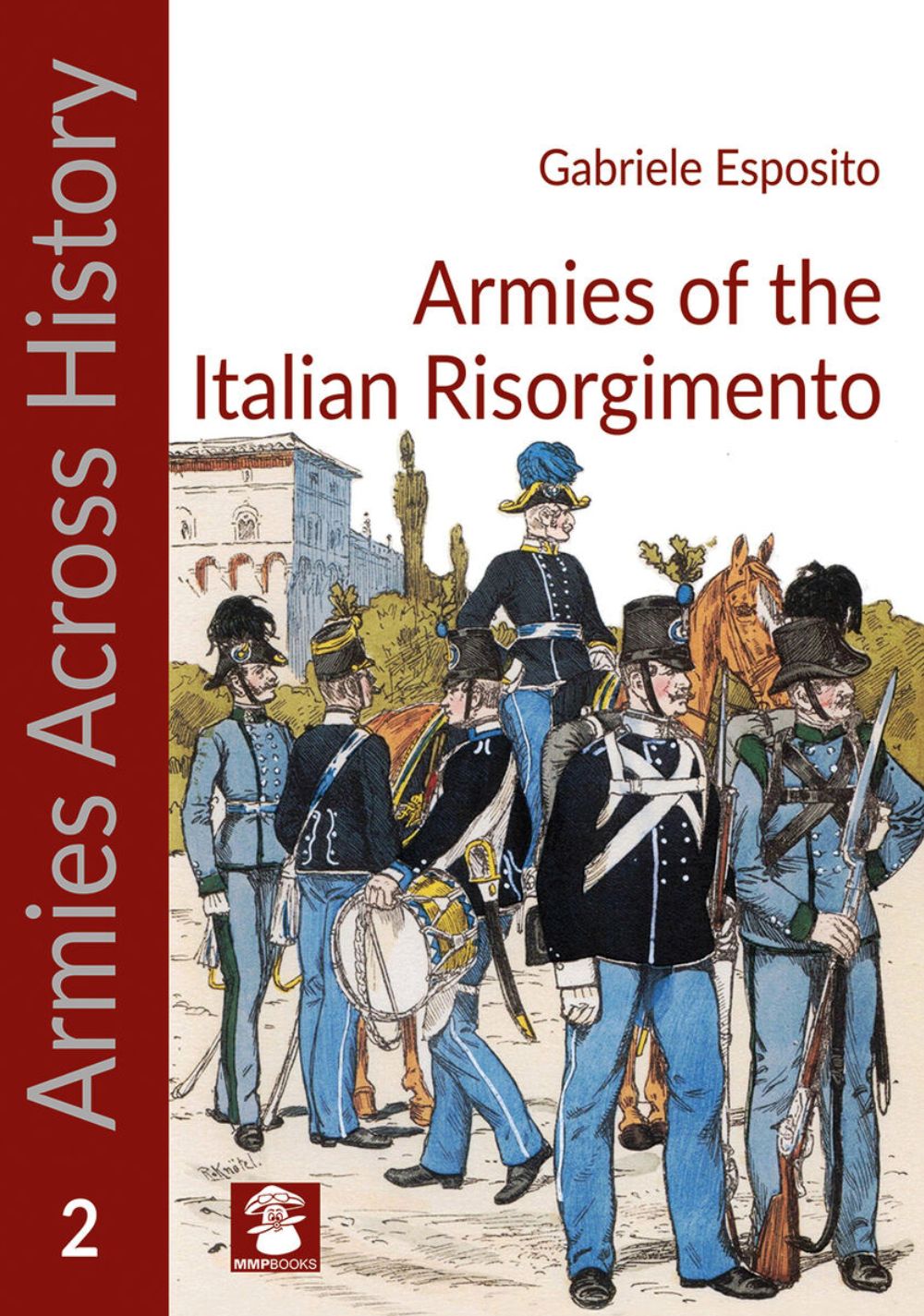
It’s just over a week since I decided to do some work on my Eastern Front/Great Patriotic War collection, but since then I’ve made little progress … and the arrival of a copy of Gabriele Esposito’s ARMIES OF THE ITALIAN RISORGIMENTO has rather knocked me off course.

Reading the book gave me loads of ideas for possible imagi-nations set in the period from 1815 to 1850. Furthermore, it gives me a way to use some of the surplus figures from my Napoleonic collection that would otherwise sit in storage boxes. These might require some renovation, varnishing, and rebasing … but that shouldn’t take me too long, and then the fighting can begin!

So, what should I do? I suspect that I’m likely to work on both these projects in parallel for a while, which I know is bit of a cop out on my part … but who cares except me?


The sort of thing that I’m envisaging with regard to any 1815 to 1850 imagi-nations armies I might create would be somewhat akin to my Cordeguayan Civil War of 1820 armies. These fought several battles back in 2011 during the early stages of the development of the PORTABLE WARGAME.

The Presidential Army (led by President-for-Life and General José Santa Maria).
The Constitutionalist Army (led by General Roberto Branco).

Tuesday, 6 June 2023

Armies of the Italian Risorgimento

A copy of ARMIES OF THE ITALIAN RISORGIMENTO (which was written by by Gabriele Esposito) was sent to me by Arthur Harman, who well knows my interest in the less well-known wars of the nineteenth century. Having read through it, I realised that it was a mine of information for both serious military historians and wargamers, and in the latter case, particularly for those whose interests lie in the direction of small campaigns and/or imagi-nations.

There are quite a few very obscure military units mentioned in the text and/or illustrated using some of the numerous contemporary, coloured plates in the book. For example, where else would I have been able to read anything about the Volontari Ecclesiastica Siciliana (Sicilian Ecclesiastical Volunteers)? These were a group of Sicilian clerics and priests who fought with Garibaldi's troops and who wore an all-black uniform that combined elements of clerical and military dress, topped off with a black Phrygian or Liberty Cap that was adorned by a large rosette in the colours of the Italian flag!

The book's contents include:

  • Introduction
  • Chronology of the Italian Risorgimento
  • The Piedmontese Army
    • Line Infantry
    • Bersaglieri
    • Naval Infantry
    • Cavalry
    • Artillery
    • Engineers and Train
    • Royal House and Cacciatori Franchi
    • Carabinieri
    • National Guard
    • The Piedmontese in Crimea
    • Unifomrs
    • Weapons
  • The Army of the Kingdom of the Two Sicilies
    • Guard Infantry
    • Guard Cavalry
    • Line Infantry
    • Foreign Infantry
    • Light Infantry
    • Naval Infantry
    • Line Cavalry
    • Artillery and Train
    • Engineers
    • Troops of the Royal House and of the General Staff
    • Gendarmerie
    • National Guard
    • Uniforms
    • Weapons
  • The Papal Army
    • Household Corps
    • National Infantry
    • Foreign Infantry
    • Cavalry
    • Artillery and Engineers
    • Volunteer Units
    • Police and Auxiliary Corps
    • Uniforms
    • Weapons
  • The Tuscan Army
    • Regular Army
    • National Guard and Volunteers
    • Uniforms
    • Weapons
  • The Modernese Army
    • Uniforms
    • Weapons
  • The Parmese Army
    • Uniforms
    • Weapons
  • The Army of the Kingdom of Sicily
    • Uniforms
  • The Army of the Lombard Provisional Government
    • Uniforms
  • The Army of the San Marco Republic
    • Uniforms
  • The Army of the Roman Republic
    • Uniforms
  • The Army of the Central Italian League
    • Uniforms
  • Garibaldi's volunteers
    • The Chasseurs of the Alps
    • The expedition of The Thousand
    • The Red Shirts
    • The 'Corpo Volontari Italiani'
    • Uniforms
    • Weapons
  • The Italian Army of 1861-1870
    • Organization
    • Uniforms
    • Weapons
  • The Italian Army after 1870
    • Infantry
    • Cavalry, Artillery and Technical Corps
    • Weapons
  • Select bibliography

I have already had several hours of enjoyable reading from this book, and I suspect that this book will be the source of several ideas for future projects.


ARMIES OF THE ITALIAN RISORGIMENTO was written by by Gabriele Esposito and published in 2022 by MMP Books (ISBN 978 83 66549 95 1).

Monday, 5 June 2023

My weekend didn’t quite go as planned.

I had plans for the past weekend, but in the end, they pretty well came to nought.

It started on Saturday morning. I had planned to spend Saturday sorting out which bits of my Eastern Front/Great Patriotic War collection needed to be worked on first, but over breakfast my wife told me that she wanted us to go the the local branch of Lidl to buy a double air fryer that was on special offer. In the end our ‘quick’ shopping trip turned into something altogether different, and we ended up leaving Lidl with a trolley full of stuff … including the double air fryer.

By the time we had unpacked everything that we had bought and installed the new air fryer in place of our old one, it was time for lunch. After lunch I spent an hour and a half labelling the envelopes that THE NUGGET will be posted out in, fixing second class stamps to those going to UK addresses, and then putting copies of the latest issue on the magazine into them. By then it was time to do some gardening I had promised to do, and it wasn’t until the late afternoon that I began sorting out my Eastern Front/Great Patriotic War collection.

I’d been working on this for about an hour when the doorbell went, and a courier delivered a book about the armies of the Risorgimento that had been sent to me by Arthur Harman. As a result I spent the rest of the afternoon reading the book (which I will review in due course) and did not return to my planned task.

On Sunday morning I attended an online meeting of the Wargame Developments committee, where the details of the forthcoming COW2023 (Conference of Wargamers) were finalised. As soon as my part had ended, I made my apologies and took Sue to Severndroog Castle, where a producer's market was due to take place. We parked our car on Shooters Hill and walked through Oxleas and Castle Woods to the Castle ... only to find that the market appeared to have been cancelled. This rather threw our plans for the day into some disarray as we had expected to buy lunch from one of the market stalls. As a result, we drove to Welling and bought lunch there.

By the time we had eaten, done some shopping, and returned home, it was already after 1.00pm. I still needed to complete some of the gardening tasks I had promised to do over the weekend, and these took me just over thirty minutes, by which time I was in need of a refreshing drink and a sit down. (I'm not as young as I used to be, and working in the garden on a warm day rather takes it out of me!)

The 'short' break for refreshment and a rest turned into a doze, and by the time I woke up, the early afternoon had slipped by and I decided that I really ought to do some of my planned sorting out. However, when I got up to my toy/wargame room on the top floor of our house, it was very hot, and even with the windows open and the fan going I only managed to stick at it for about thirty minutes, by which time I was in need of another drink.

Whilst I had been upstairs, Sue had been finishing off the online check-in for our next cruise, and before I could return downstairs, she called me on our internal phoneline and asked me to log on and print off our boarding passes and luggage labels. This took longer than expected because the printer need to have a new colour ink cartridge installed. I eventually completed this 'simple' task and made my way downstairs ... by which time it was almost time for afternoon tea. For once, afternoon tea did not comprise tea and cakes: instead, Sue and I each had a large bowl of fruit salad. It was very refreshing and a lot healthier.

All the time I had been gardening and sorting out the inkjet printer, I kept thinking about the contents of the book Arthur Harman had sent me. The uniforms were from that period when the Napoleonic shako-and-tailcoat style had gradually evolved into the kepi or helmet and jacket style of the late ninetieth and early twentieth century. Not quite the same as those of the Belle Époque, but not all that different ... and I kept thinking about the RISK figures that I had bought to photograph for THE SECOND PORTABLE WARGAME COMPENDIUM.

The replacement RISK figures that I bought from the United States. They are approximately 15mm scale and are made of hard plastic.

Mark Cordone had used these figures to create some very nice armies and it struck me that I could copy his example ...

Mark Cordone's Waterloo French Army. © Mark Cordone.
Mark Cordone's Waterloo Anglo-Dutch/Allied Army. © Mark Cordone.
Mark Cordone's Waterloo Prussian Army. © Mark Cordone.

The end result of all of this is that I have yet to make very much progress in sorting out my Eastern Front/Great Patriotic War collection and I am in danger of being diverted towards working on a new project. In other words, I'm experiencing a typical wargamer's dilemma!

Wednesday, 8 February 2023

Soldiers of the Queen (SOTQ): Issue 185

The Winter 2022/23 issue of the Victorian Military Society's SOTQ (Soldiers of the Queen) arrived in the post a couple of days ago, and as usual, it contains a very interesting selection of articles on a wide variety of subjects.

The articles included in this issue are:

  • The Courtier and the Queen: Sir John McNeil, V.C. and the Tofrek Controversy by Prof. Ian F W Beckett
  • Three Butlers, a Book and Burma 1824-1926 by David Howell
  • The Diehards at Detling by Tim Rose
  • An African Adventure: The 2/Yorkshire Regiment in Somaliland& by John Sly
  • The Candia Massacre, 1898; William Sidney Churchill and the search for a scapegoat by Mick McTiernan
  • Book Reviews by Dr Roger T Stearn, Dr Linda Parker, and Dr Roger Atwood
  • Officers of the Victorian Military Society

This issue contained the usual mix of interesting articles, and I wish that some of the wargamer magazines that I sometimes read could provide a similar diet of stimulating and original reading.

The cost of membership of the Victorian Military Society (UK: £25.00 and Overseas: £30.00) is well worth it.

Saturday, 23 October 2021

Other people's Portable Wargame battle reports: Mark Cordone's Battle of Leipzig

I recently mentioned that Mark Cordone was intending to use a tweaked version of the PORTABLE NAPOLEONIC WARGAME to refight the Battle of Leipzig, and over the last week he has done just that ... and shown that although the rules were originally designed for an 8 x 8 or an 8 x 9 grid, they can be used on a much larger playing surface.

I would love to be able to reproduce Mark's entire battle report, but it is so long and detailed (and very well illustrated with lots of photographs) that it is best read either on the PORTABLE WARGAME Facebook page or on Mark's own Facebook page.

Here are some examples of the photographs of his battle:


Please note that the photographs featured above are © Mark Cordone.

Friday, 18 June 2021

I had a plan …

… to refight the Battle of Waterloo today, but due to circumstances that are outside my control, I have not been able to do so. I was going to use Old Trousers’ WATERLOO A LA CARTE as the basis for my refight, but using a version of my PORTABLE NAPOLEONIC WARGAME rules. I even organised the troops I intended to use along the lines set out in Old Trousers’ ORBAT:

French

  • Imperial Guard infantry: 2 units (2 x 4 SPs)
  • Line infantry: 4 units (4 x 4 SPs)
  • Conscript line infantry: 2 units (2 x 3 SPs)
  • Light infantry: 1 unit (4 SPs)
  • Light cavalry: 1 unit (3 SPs)
  • Heavy cavalry: 1 unit (3 SPs)
  • Artillery: 2 units (2 x 2 SPs)
  • Commander (6 SPs)
  • Total strength = 50 SPs
  • Exhaustion point: The loss of 17 SPs

Allies

  • British Guard Infantry: 1 unit (4 SPs)
  • British line infantry: 2 units (2 x 4 SPs)
  • British Rifles: 1 unit (4 SPs)
  • Hanoverian infantry: 1 unit (3 SPs)
  • Dutch-Belgian infantry: 2 units (2 x 3 SPs)
  • British heavy cavalry: 1 unit (3 SPs)
  • Dutch-Belgian cavalry: (3 SPs)
  • British artillery: 1 unit (2 SPs)
  • Prussian line infantry: 3 units (3 x 4 SPs)
  • Commander (6SPs)
  • Total strength = 45 SPs
  • Exhaustion point: The loss of 15 SPs

I hope to stage this refight at some point … but I am sure when.

Thursday, 3 June 2021

Amateur Armies: Militias and Volunteers in War and Peace, 1797-1961

Many years ago, I bought and read THE DEFENDERS: A HISTORY OF THE BRITISH VOLUNTEER by Geoffrey Cousins (published in 1968 by Frederick Muller Limited).

I was intrigued by the history of the British Rifle Volunteer movement of the Victorian era, so when I saw Stephen Cullen’s AMATEUR ARMIES: MILITIA AND VOLUNTEERS IN WAR AND PEACE, 1797-1961, I decided to buy a copy.

I was not disappointed by my choice.

The book not only covers the history of militias in various nations, but also the failed French invasion of Fishguard in 1797, the development and popularity of the Victorian Rife Volunteer movement, the various left and right-wing political militias that took part in the Spanish Civil War, and the role played by the Cuban Militia in Castro’s post-revolution Cuba. The latter includes the defeat of the Bay of Pigs invasion, a topic of particular interest to me.


AMATEUR ARMIES: MILITIA AND VOLUNTEERS IN WAR AND PEACE, 1797-1961 was written by Stephen M Cullen and published in 2020 by Pen & Sword Military (ISBN 978 1 52673443 3).

Sunday, 30 May 2021

America's Forgotten Wars: From Lord Dunmore to the Philippines

I already own several of Ian Hernon's books about colonial history, and when I saw that he had recently written a new addition to the series, I had to buy a copy.

The books I already own include:

  • MASSACRE AND RETRIBUTION: FORGOTTEN COLONIAL WARS OF THE 19TH CENTURY
  • THE SAVAGE EMPIRE: FORGOTTEN WARS OF THE 19TH CENTURY
  • BLOOD IN THE SAND: MORE FORGOTTEN WARS OF THE 19TH CENTURY
  • BRITAIN'S FORGOTTEN WARS: COLONIAL CAMPAIGNS OF THE 19TH CENTURY
  • THE SWORD AND THE SKETCH BOOK: A PICTORIAL HISTORY OF QUEEN VICTORIA'S WARS

His latest book is entitled AMERICA'S FORGOTTEN WARS: FROM LORD DUNMORE TO THE PHILIPPINES and covers the period between 1774 and 1902.

It follows a similar pattern to his earlier books, and includes short chapters on each of the following:

  • Lord Dunmore's War (1774) and Native Americans in the Revolutionary War (1775-1783)
  • Little Turtle's War (1785-1795)
  • Shay's Rebellion (1786-1787) and the Whiskey Rebellion (1791-1794)
  • The Quasi War (1798-1800)
  • The Barbary Wars (1801-1805 and 1815)
  • The German Coast Rebellion (1811)
  • Aegean Sea Anti-piracy Operations (1825-1828)
  • Sumatra Operations (1832 and 1838)
  • The Pork and Beans War (1838-1839) and the Pig War (1859-1872)
  • More Pirates and 'Savages' (1838-1842)
    • The Exploring Expedition (1838-1842)
    • Ivory Coast (1842)
    • Fiji Expedition (1849 and 1859)
  • Cortina Wars, Texas (1859-1861)
  • The Shinmiyangyo Korean Expedition (1871)
  • The Modoc War (1872-1873)
  • The Samoan Crisis (1887-1889)
  • The Spanish-American War (1898)
  • The Philippines War (1899-1902)

I knew a quite a bit about some of the wars covered in the book, I had heard of several that I did not know much about, and there are some that were completely new to me!

From what I have read so far, this is a book that will give Colonial wargamers all sorts of inspiration for odd little campaigns they can fight. In most cases, the armies are small and would not be too dificult to reproduce ... especially if one were to use a suitably adapted version of my PORTABLE WARGAME rules.


AMERICA'S FORGOTTEN WARS: FROM LORD DUNMORE TO THE PHILIPPINES was written by Ian Hernon and published in 2021 by Amberley Publishing (ISBN 978 1 4456 9530 3).

Monday, 8 February 2021

Other people’s Portable Wargame battle reports: 54mm Napoleonic battle

Hot on the heels of Gary Sheffield's recent PORTABLE NAPOLEONIC WARGAME battle report, Mike Lewis has included a battle report on his blog in which he describes a recent wargame he fought using his own modification of the rules. What makes this battle report even more interesting than normal was the fact that he used 54mm figures. As the following photographs show, the results looked pretty spectacular.


Please note that the photographs featured above are © Mike Lewis.