Pages

Thursday, 29 September 2022

The demise of Knuston Hall

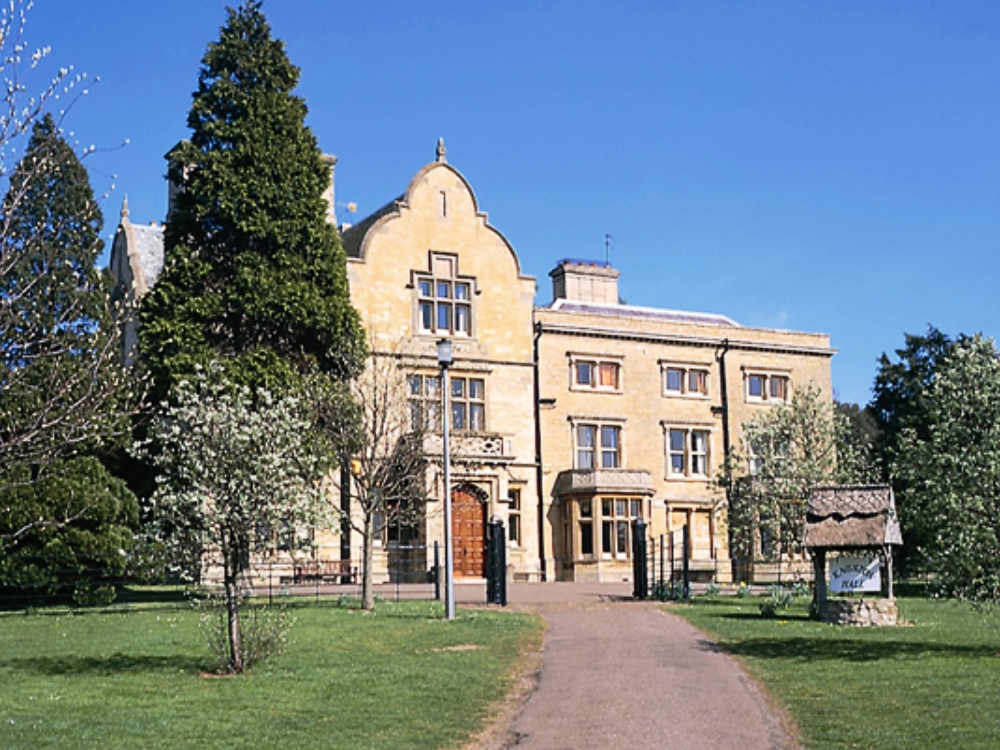
I have just been sent a link to the Northamptonshire Telegraph. It headlines the news that North Northamptonshire Council has decided to sell Knuston Hall, the location used for Wargame Developments’ annual Conference of Wargamers (COW) from 1981 until 2021.
In a statement, Councillor Graham Lawman, the Council’s executive member for highways, travel and assets, said:

Knuston Hall is a Grade II listed heritage asset and, until recently, has been used as a creative course and event centre including overnight accommodation. The hall was closed during the Covid-19 pandemic and re-opened briefly in 2021, with heavily restricted guest numbers, until it closed again in January 2022 following surveys conducted at the start of the year finding that it no longer met statutory compliance requirements. To overcome these would have entailed significant investment in the building. Unfortunately, a combination of the need for such a significant investment to bring it up to standard and a large uplift in annual maintenance budgets means the business has become financially unviable.

It is very doubtful that whoever buys Knuston Hall will reopen it as a residential conference centre, so the forty-year link between Wargame Developments and Knuston Hall is over. For those of us who spent many very enjoyable conferences there, it will be sadly missed.

I hope that the excellent staff are treated properly by the Council and are either redeployed to better jobs or are given enhanced early retirement or a significant redundancy payment. They certainly deserve to be treated properly as they and the Hall are – in my humble opinion – victims of the previous council's shambolic governance. Their incompetance and financial mismanagement, added to lack of investment in what was a viable income generating asset, has led to the situation where the Hall had to close.

Wednesday, 28 September 2022

What name to use? A possible winner

After some great suggestions, a shortlist has emerged. The two frontrunners are

  • Albion (probably the Commonwealth of Albion, ruled over by the Queen and Lord Protector, Queen Gloriana)
  • Avalon (probably the Commonwealth of Avalon, ruled over by The Queen and Lord Protector, Queen Valberta)

I am tending to favour the latter of the two as the possessives of the country and monarch are Avalonian and Valbertan respectively, which seem to trip off the tongue slightly easier than Albionian and Glorianan. I also like the mythical links back to Arthurian Britain, one of the earliest imagi-nations.

Tuesday, 27 September 2022

The button box is sorted

I recently wrote about a 'sorting the button box' exercise that I undertook with regard to my collection of Axis and Allies Miniatures.

I have since 'won' a couple of eBay auctions that have increased the size of my collection, which now looks like this (the numbers indicate how many of each I have in my collection):

Australia

  • Veteran SMLE Riflemen (Contested Skies; Infantry; Common) 2

Canada

  • Canadian Infantrymen (D-Day and 1939–1945; Infantry; Common) 4
  • Eagle-Eyed NCO (D-Day and 1939–1945; Commander; Uncommon) 4
  • Sherman DD (D-Day; Tank; Rare) 1

Nationalist China

  • Kuomintang Machine-Gun Team (Set II; Machine-Gun Team; Uncommon) 3
  • Kuomintang Officer (Set II; Commander; Uncommon) 1
  • Kuomintang Riflemen (Set II; Infantry; Common) 4

Finland

  • Finnish Infantry (Eastern Front; Infantry; Common) 1
  • Finnish Machine-Gun Team (Eastern Front; Machine-Gun Team; Uncommon) 1
  • T-26E (Early War 1939–41; Tank; Rare) 3

France

  • Canon de 75 modele 1897 (Early War 1939–41; Artillery; Common) 1
  • Hotchkiss Machine-Gun Team (Eastern Front; Machine-Gun Team; Uncommon) 3
  • Lebel 86M93 Grenadier (Contested Skies; Infantry; Common) 1
  • MAS 7.5 mm Rifle (Base Set and 1939–1945; Infantry; Common) 22

Germany

  • BMW R75 (Contested Skies; Motorcycle; Uncommon) 1
  • Fallschirmjäger (Reserves; Paratrooper; Common) 5
  • Flammenwerfer 35 (Eastern Front; Flamethrower; Uncommon) 1
  • Focke-Wulf Fw 190A (D-Day; Aircraft; Rare) 1
  • Jagdpanther (Base Set and 1939–1945; Tank Destroyer; Rare) 1
  • Jagdpanzer IV/70 (Eastern Front; Tank Destroyer; Rare) 1
  • Luftwaffe Infantrymen (Contested Skies; Infantry; Common) 7
  • Light Mortar (Base Set; Mortar; Common) 10
  • Marder II (D-Day; Tank Destroyer; Uncommon) 9
  • Mauser Kar 98k (Base Set and 1939–1945; Infantry; Common) 23
  • MG 42 Machine-Gun Team (Base Set, 1939–1945 and North Africa; Machine-Gun Team; Uncommon) 12
  • Nebelwerfer 41 (Reserves and Eastern Front; Artillery; Uncommon) 2
  • PaK 35/36 Antitank Gun (Eastern Front; Artillery; Common) 5
  • PaK 40 Antitank Gun (Set II; Artillery; Uncommon) 1
  • Panther Ausf. D (Reserves; Tank; Rare) 1
  • Panzer II Ausf. C (Base Set; Tank; Rare) 1
  • Panzer II Ausf. F (Eastern Front and Early War 1939–41; Tank; Uncommon) 1
  • Panzer III Ausf. F (Set II, 1939–1945 and Early War 1939–41; Tank; Uncommon, Rare) 4
  • Panzer IV Ausf. G (Early) (Eastern Front and Counter Offensive; Tank; Rare) 4
  • Panzerfaust 30 (Base Set and 1939–1945; Infantry Antitank Team; Common) 14
  • Panzerschreck (Contested Skies; Antitank Team; Common) 4
  • Sd Kfz 222 (Base Set; Armoured Car; Uncommon) 1
  • Sd.Kfz. 251 (Base Set, 1939–1945 and North Africa; Half-Track; Uncommon) 1
  • sGrW 34 81mm Mortar (D-Day and Eastern Front; Mortar; Uncommon) 5
  • sIG 33 (Base Set; Assault Gun; Rare) 1
  • SS-Haupsturmführer (Base Set and 1939–1945; Commander; Uncommon) 11
  • SS-Panther Ausf. G (Base Set; Tank; Rare) 2
  • SS-Panzer IV Ausf. F2 (Set II; Tank; Rare) 2
  • SS-Panzergrenadier (Base Set and Eastern Front; Infantry; Common) 7
  • SS Stormtroopers (Contested Skies; Infantry; Common) 7
  • StuG III Ausf. D (Contested Skies and 1939–1945; Assault Gun; Uncommon) 1
  • Tiger I (Base Set, 1939–1945 and Eastern Front; Tank; Rare) 5
  • Veteran Fallschirmjäger (North Africa and Counter Offensive; Paratrooper; Uncommon) 1
  • Volkssturm Infantrymen (Reserves; Infantry; Common) 4
  • Wehrmacht Expert Sniper (Set II; Sniper; Uncommon) 1
  • Wehrmacht Oberleutnant (Set II and Eastern Front; Commander; Uncommon) 2
  • Wehrmacht Veteran Infantrymen (D-Day and North Africa; Infantry; Common) 1
  • Werwolf Partisans (Reserves; Partisan; Common) 4

Greece

  • Greek Mountain Infantry (Counter Offensive; Infantry; Common) 1
  • Greek Officer (North Africa; Commander; Uncommon) 1
  • Greek Soldier (North Africa; Infantry; Common) 7

Hungary

  • 8mm Huzagol 35M (Reserves and Eastern Front; Infantry; Common) 16
  • PzKpfw 38 (t) (Eastern Front; Tank; Rare) 1
  • Turan I (Reserves; Tank; Uncommon) 12
  • 40/43M Zrinyi Assault Howitzer (Counter Offensive; Assault Gun; Rare) 1

Italy

  • Blackshirts (Set II; Infantry; Common) 4
  • Brixia M35 45 mm Mortar (Contested Skies and Eastern Front; Artillery; Uncommon) 3
  • Fucile Modello 1891 (Base Set and 1939–1945; Infantry; Common) 9
  • Italian Conscript (North Africa; Infantry; Common) 11
  • L6/40 (Eastern Front; Tank; Uncommon) 1
  • Stalwart Lieutenant (Contested Skies and 1939–1945; Commander; Uncommon) 4

Japan

  • Azad Hind Fauj Infantrymen (Reserves; Infantry; Common) 4
  • Type 89 Mortar (Base Set and 1939–1945; Mortar; Common) 4

New Zealand

  • New Zealand Commander (Counter Offensive; Commander; Uncommon) 1
  • New Zealand Infantry (Counter Offensive; Infantry; Common) 2

Poland

  • Cavalrymen (Set II; Cavalry; Uncommon) 4
  • Determined Infantrymen (Reserves; Infantry; Common) 5

Romania

  • Antitank Grenadier (Set II and Eastern Front; Infantry; Common) 13
  • Bohler 47 mm Antitank Gun (Contested Skies; Artillery; Uncommon) 1
  • R35 (Eastern Front; Tank; Uncommon) 1
  • Romanian Infantry (Eastern Front; Infantry; Common) 1
  • Vigilant Lieutenant (Contested Skies and Eastern Front; Commander; Uncommon) 16

South Africa

  • South African Infantry (Early War 1939–41; Infantry; Common) 1

Slovak Republic

  • Slovakian Infantry (Counter Offensive; Infantry; Common) 3

Soviet Union

  • 82mm PM-37 Mortar (Contested Skies and 1939–1945; Mortar; Common) 13
  • BM-13 Katyusha Rocket Launcher (Contested Skies; Artillery; Rare) 3
  • Commissar (Base Set and 1939–1945; Commander; Uncommon) 3
  • Communist Partisans (Contested Skies; Partisan; Common) 9
  • Cossack Captain (Set II; Commander; Uncommon) 1
  • Cossack Cavalrymen (Contested Skies; Cavalry; Uncommon) 3
  • Degtyarev DP27 (Reserves; Infantry; Common) 2
  • Fanatical Sniper (Set II and Eastern Front; Sniper; Common) 3
  • Hero of the Soviet Union (D-Day; Hero; Uncommon) 1
  • IL-10 Sturmovik (Contested Skies and 1939–1945; Aircraft; Rare) 1
  • IS-2 Model 1944 (Set II and 1939–1945; Tank; Rare) 2
  • KV-1 (Base Set and 1939–1945; Tank; Rare) 1
  • Mosin–Nagant 1891/30 (Base Set and 1939–1945; Infantry; Common) 7
  • PPSh-41 SMG (Set II and Eastern Front; Infantry; Common) 7
  • PTRD-41 Antitank Rifle (Set II and Eastern Front; Antitank; Uncommon) 2
  • Red Army Forward Observer (Contested Skies; Artillery Observer; Common) 3
  • Soviet Grenadiers (Contested Skies; Infantry; Common) 5
  • Soviet-Polish Infantry (Eastern Front; Infantry; Common) 4
  • SU-76M (D-Day; Tank Destroyer; Uncommon) 6
  • T-34/76 (Base Set and 1939–1945; Tank; Rare and Uncommon) 6
  • T-35 (Reserves; Tank; Rare) 1
  • T-70 Model 1942 (Set II, 1939–1945 and Eastern Front; Tank; Uncommon) 3
  • ZIS-2 57mm Model 1943 (Set II and 1939–1945; Anti-tank Gun; Uncommon) 9

United Kingdom

  • 6-Pounder Antitank Gun (Base Set; Antitank Gun; Common) 10
  • 17-Pounder Antitank Gun (Contested Skies; Antitank Gun; Uncommon) 1
  • Archer (Set II; Tank Destroyer; Uncommon) 4
  • Bren Machine Gunner (D-Day and North Africa; Infantry; Common) 2
  • Churchill Crocodile (Base Set; Tank; Rare) 2
  • Cromwell IV (Set II and 1939–1945; Tank; Rare) 5
  • Defiant Paratroopers (D-Day; Paratrooper; Common) 7
  • Entrenched Antitank Gun (Eastern Front; Antitank Gun; Common) 2
  • Gurkha Riflemen (Contested Skies; Infantry; Common) 7
  • Humber Scout Car (Base Set and 1939–1945; Armoured Car; Uncommon) 5
  • Inspiring Lieutenant (Base Set and 1939–1945; Commander; Uncommon) 52
  • M3 Stuart (Base Set and North Africa; Tank; Uncommon) 1
  • Mk.VII Tetrarch (D-Day; Tank; Uncommon) 3
  • PIAT Gunner (Set II; Anti-Tank Team; Uncommon) 1
  • Royal Engineers (Base Set; Engineer; Common) 16
  • Sten Gun (North Africa; Infantry; Common) 4
  • Universal Carrier (Contested Skies and Counter Offensive; Transport; Uncommon) 4
  • Vickers Machine-Gun Team (Base Set and 1939–1945; Machine-Gun Team; Uncommon) 12

United States

  • 3" Gun M5 (Set II; Antitank Gun; Uncommon) 2
  • BAR Gunner (Set II; Infantry; Common) 2
  • Bazooka (Base Set and 1939–1945; Antitank Team; Common) 13
  • Buffalo Soldiers (D-Day; Infantry; Common) 9
  • FO Jeep (Contested Skies; Artillery Observation vehicle; Uncommon) 2
  • Hunting Sniper (Contested Skies; Sniper; Uncommon) 5
  • Jeep (Base Set and Eastern Front; Transport; Common) 4
  • M1 Garand Rifle (Base Set and 1939–1945; Infantry; Common) 12
  • M3 Lee (Base Set; Tank; Rare) 1
  • M4A1 Sherman (Base Set and 1939–1945; Tank; Uncommon) 8
  • M4A3 (105) Sherman (Base Set and 1939–1945; Artillery; Rare) 1
  • M4A3E8 Sherman Easy Eight (Base Set; Tank; Rare) 1
  • M5 Half-Track (Set II, 1939–1945 and North Africa; Half-Track; Uncommon) 3
  • M26 Pershing (Contested Skies and 1939–1945; Tank; Rare) 1
  • M36 MGC (Contested Skies; Tank Destroyer; Rare) 2
  • Marine Riflemen (Contested Skies; Infantry; Common) 11
  • Marines M2-2 Flamethrower (Base Set; Flamethrower; Common) 5
  • Mortar M2 (Base Set; Mortar; Common) 4
  • P-51D Mustang (Contested Skies and 1939–1945; Aircraft; Rare) 1
  • Quad 50 (Contested Skies and 1939–1945; Antiaircraft Gun; Uncommon) 4
  • Red Devil Captain (Base Set and 1939–1945; Commander; Uncommon) 11
  • Resourceful Hero (D-Day; Hero; Uncommon) 1
  • Screaming Eagle Captain (Set II; Paratrooper Commander; Uncommon) 2
  • U.S. Engineer (Eastern Front; Engineer; Uncommon) 1

Kingdom of Yugoslavia

  • Yugoslav Partisan Infantry (Counter Offensive; Infantry; Common) 1

Obstacles and Support Units

  • Barbed Wire (D-Day; Obstacle; Common) 4
  • Headquarters (Reserves; Support; Uncommon) 1
  • Minefield (D-Day; Obstacle; Common) 1
  • Pillbox (D-Day; Obstacle; Uncommon) 3
  • Tank Obstacle (D-Day; Obstacle; Common) 2

It is interesting to note just how uneven the distribution of figures and vehicles are. For example, I have virtually no Japanese stuff ... but also have 52 Inspiring UK Lieutenants and 16 Vigilant Romanian Lieutenants!

Looking at what I now have in my collection, it has become obvious that with a few judicious additional purchases, mainly of figures and artillery, I could quite easily put together several World War 2 Fast Play Portable Wargame armies, so having recently decided to put my Eastern Front/Great Patriotic War project on the back burner, it might just have eased itself forward just a bit!

As the figures and vehicles are already painted, creating such armies would be relatively quick and simple. Furthermore, they take up a lot less space than my existing 20mm collection and are much lighter to carry about, all of which makes the idea much more attractive in the light of my current medical problems.

Monday, 26 September 2022

Nugget 347

I collected the latest issue of THE NUGGET on Saturday, and I will post it out to members later today. In the meantime, members can read this issue online.

IMPORTANT: Please note that this is the second issue of THE NUGGET to be published for the 2022-2023 subscription year. If you have not yet re-subscribed, a reminder was sent to you some time ago. If you wish to re-subscribe using the PayPal option on the relevant page of the website, you can use the existing buttons as the subscription cost has not changed.

Saturday, 24 September 2022

What name to use?

Having finished my Zubian Army, I only have the British Colonial figures in my collection to renovate, varnish, and rebase. This should take me about a fortnight … but I’m rather stuck as to what to call the country whose army they will represent.

In the past I’ve used Britannia, and that is currently the front runner. However, I’m open to using a different name and I’d appreciate suggestions. Alternatives I have already considered so far include:

  • The United Kingdoms (which harks back to the heptarchy)
  • Albion (the name used by the Romans before the name Britannia became more popular)
  • Anglia (named after the Angles who invaded during the post-Roman period)
  • Saxony (again, named after the Saxons who invaded during the post-Roman period)
  • Jutland (yet again, named after the Jutes who invaded during the post-Roman period)
  • Pritania (derived from the Greek name – Pritani – used before the Roman invasion)
  • Northland, Norland, or Normandy

Thursday, 22 September 2022

The Army of Zubia: The infantry, machine gun, artillery, and train units

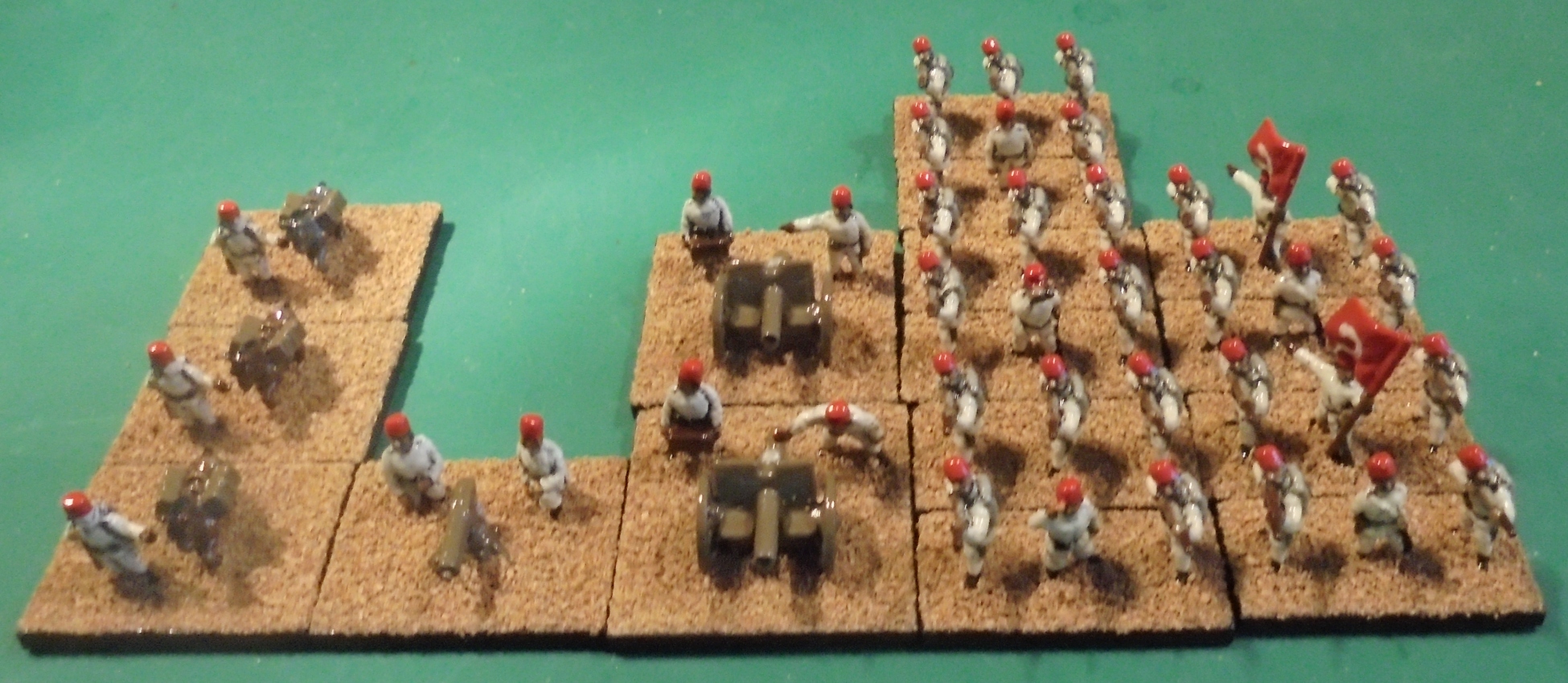
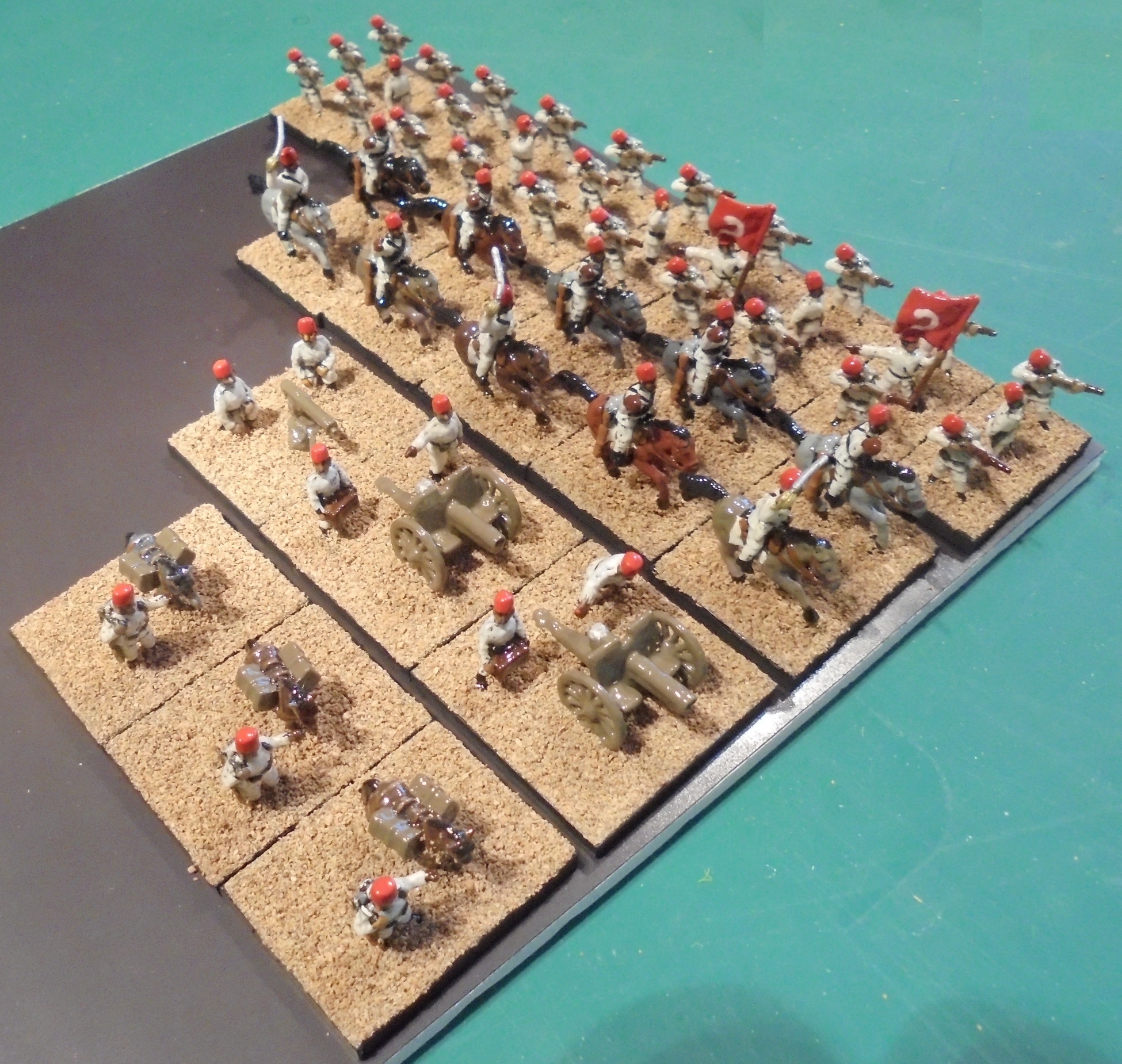
I have just finished renovating, varnishing, and rebasing the rest of the units that will make up the Army of Zubia.

The Army of Zubia has the following units:

  • Infantry
    • 1st Guard Regiment
    • 2nd Guard Regiment
    • 1st Infantry Regiment
    • 2nd Infantry Regiment
    • 3rd Infantry Regiment
    • 1st Machine Gun Battalion
  • Cavalry
    • 1st Cavalry Regiment
    • 2nd Cavalry Regiment
    • Independent Cavalry Squadron
  • Artillery
    • 1st Artillery Regiment
    • 2nd Artillery Regiment
  • Train
    • 1st Supply Column
    • 2nd Supply Column
    • 3rd Supply Column

The Army of Zubia.
The units are shown attached to the magnetic sheet that holds them in place in thier REALLY USEFUL BOXES storage box.

Units shown in italics are militia or reserve units.

Wednesday, 21 September 2022

Nugget 347

The editor of THE NUGGET sent me the latest issue on Sunday, and I will send it to the printer later this morning. With luck, it should be ready to be posted out to members early next week.

IMPORTANT: Please note that this is the second issue of THE NUGGET to be published for the 2022-2023 subscription year. If you have not yet re-subscribed, a reminder was sent to you some time ago. If you wish to re-subscribe using the PayPal option on the relevant page of the website, you can use the existing buttons as the subscription cost has not changed.

Tuesday, 20 September 2022

A bit of nostalgia ... and possibly the reason why I am interested in military history

After I had found the photograph of the Frazier Street Coronation street party, I remembered that I had an aerial photograph of the Waterloo area dating from before the Second World War.

I have annotated it so that anyone who knows that part of London as it is now should be able to pick out the various places that still exist.

The following map extract should help.

I was born in the General Lying-In Hospital (shown below circled in red), my Aunt Mary, Uncle Peter, cousin Jacqueline, and grandmother lived on Webber Row (circled in light blue), my great grandmother and my Aunt Kit lived in a tenement off Frazier Street (circled in purple), and when she was a child my mother went to school at Joanna Street School (circled in green)

My maternal relatives did their shopping in Lower Marsh, which they always called 'The Cut' even thought the road with that name actually runs between the Waterloo and Blackfriars Roads, and I had another aunt (my grandmother's sister, who was also somewhat confusingly called Mary and referred to in the family as Little Aunt Mary) who lived with her husband on an estate just across the Waterloo Bridge Road.

My paternal relatives lived in the East End, and when I was growing up, I saw less of them than I did my mother's family. My grandmother looked after me a lot when I was very young, and her idea of child car was to take me to the Imperial War Museum (which is just off the bottom of the map) and let me wander whilst she sat outside chatting with her friends. The museum's warding staff (most of whom were veterans of the First World War) looked after me and explained the exhibits to me ... so it is no wonder that I grew up with such an interest in military history!

Monday, 19 September 2022

The Queen Is Dead! Long Live The King!

Today is the day of the late Queen's funeral, and Sue and I will, like many other people, be spending it at home watching events as they unfold.

The late King, George VI, died on 6th February 1952, the day before my second birthday, and the late Queen immediately became Queen Elizabeth II. Her coronation was held on 2nd June 1953, and I have a few vague and very hazy memories of attending a street party that was held on that day in Frazier Street, Waterloo, SE1.

The Coronation street party held in Frazier Street. In the background are several of my aunts, my grandmother, and my great grandmother.
Me (aged 3), not looking at the camera! Even then I was probably more interested in the food than what was going on around me.

During my life I have worked for the bank that dealt with the Queen's money (Coutts and Company) and although I was not introduced to her, I was at the opening of the Royal Artillery Museum in Woolwich, and she passed me whilst I was standing by one of the exhibits. (As a member of the Board of Friends of the Museum I was asked to stand by an exhibit that I knew something about. I chose the M1 75mm Pack Howitzer, which my father had used when he was a member of 53rd [Worcestershire Yeomanry] Air Landing Light Regiment, Royal Artillery). We were told not to try to make eye contact with her, so all I actually saw was the feather on the top of her hat as she walked past me!

Today I will be saying a quiet 'Goodbye' to her as I watch her funeral unfold. She has been my sovereign for most of my life and I am still finding it difficult not to refer to the new king a Prince Charles.

THE QUEEN IS DEAD!
LONG LIVE THE KING!


We are also having to get used to singing the revised word of the National Anthem.

God save our gracious King!
Long live our noble King!
God save the King!
Send him victorious,
Happy and glorious,
Long to reign over us,
God save the King.

Thy choicest gifts in store
On him be pleased to pour,
Long may he reign.
May he defend our laws,
And ever give us cause,
To sing with heart and voice,
God save the King.

Sunday, 18 September 2022

Backstories for my Belle Époque imagi-nations: The Khedivate of Zubia

The history of Zubia can be traced back to beyond the beginnings of recorded history. It is one of the earliest cradles of civilisation, and its people live in the shadows of many ancient monuments. However its era of importance as a major power has long gone, and it is now just a dusty, insignificant former province of the Sofaman Empire.

The flag of the Khedivate of Zubia.

Its current ruler – the Khedive of Zubia – is a middle-aged, fat, and indolent individual who lives in luxury whilst the peasants live in abject poverty. He is descended from an Stalbanian soldier who was made Khedive over one hundred years ago by a grateful Sofaman Sultan (the Stalbanian had saved the Sultan’s life). The country could be rich – it has the potential to grow far more food crops than the population can eat – but the Khedive has done little to improve the lot of the population. Instead he taxes them hard and uses the money to buy fine wines for himself, fashionable dresses for his numerous mistresses, and to build himself bigger and more lavish palaces.

The River Zub is Zubia. Without it the country would not exist. The river brings the silt that makes the land fertile. Its water is used to irrigate the fields. It also provides an easy means of movement from one end of the country to the other. Along the banks of the river everything is green; away for the river everything is desert.

The majority of Zubians are hard-working peasants who live in the villages and settlements that dot the fertile area along the edge of the River Zub. They tend their fields, grow their crops, and pay their taxes – often under duress. They are not generally a warlike people, but when roused they can be formidable opponents. Most towns are populated almost exclusively by urbanised Zubians, whereas a cosmopolitan mix of foreign traders, bankers, and civil servants, Stalbanian army officers, Levantine businessmen, and Zubian servants forms the population of the capital city – Zubairo – as well the main towns of Secundria and Port Zub.

A few Zubians still follow the old ways and live nomadic lives. They move from one oasis to another as the seasons change, and they depend upon their herds of camels and goats to supply them with almost everything the need. They rarely visit the fertile area along the River Zub except to buy essential supplies and to trade camel or goatskins.

The army of Zubia is small but reasonably well equipped. Its recruits are ‘taken’ from amongst the Zubian peasants, and the officers are mostly second or third-generation Stalbanians and Khakistanis, although a few Zubians have been promoted from the ranks.