Pages

Monday, 15 January 2024

The MF&FMLR model railway project: The Mucking Battery or Fort Bean (Part 1)

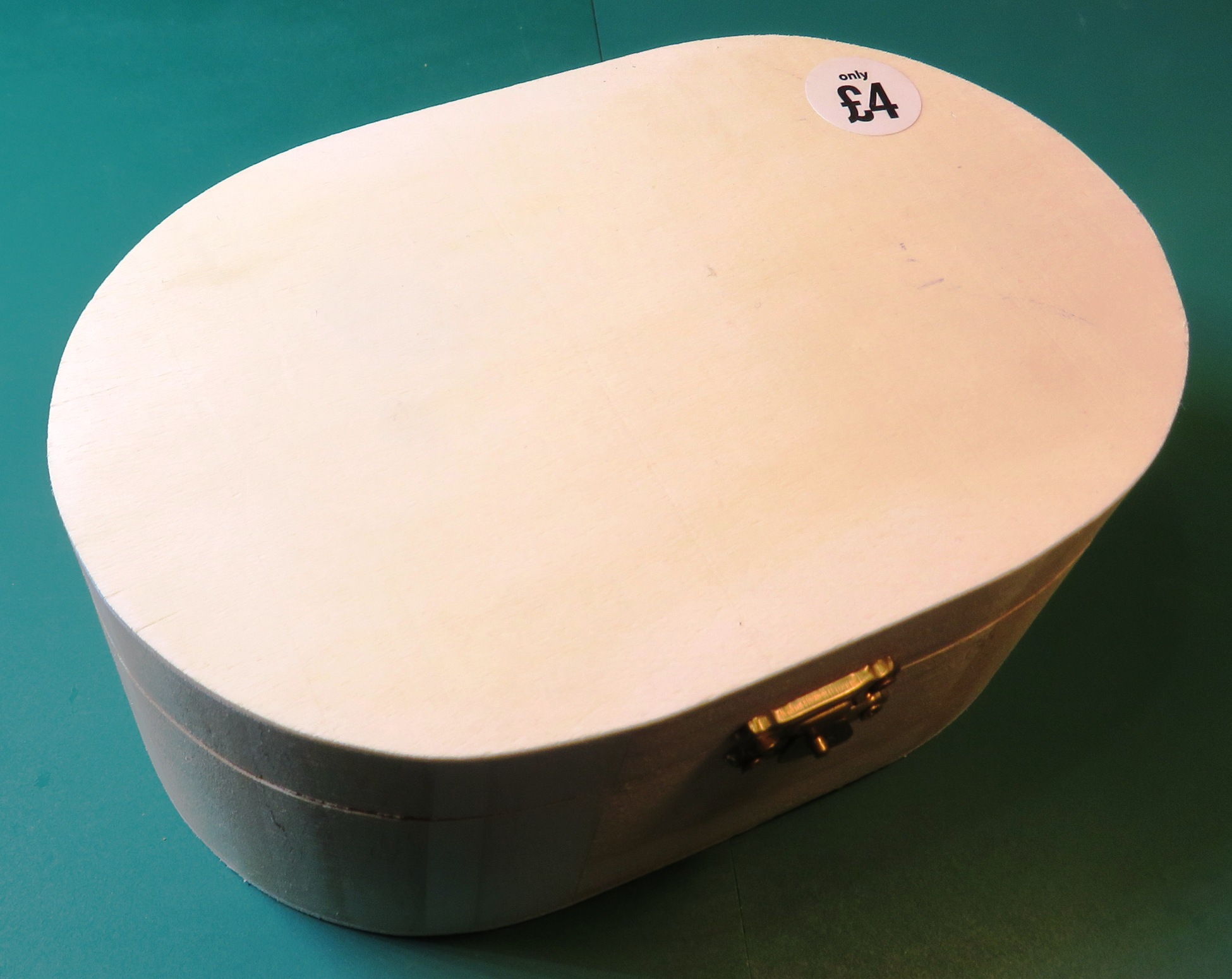
Like the Brennan torpedo launching station, the Mucking Battery (which was also known as Fort Bean) began life as a wooden box from THE WORKS. In this case it was a large oval jewellery box that cost me £4.00.

I removed the lid from the box and put the bottom part to one side. I then filled in the screw holes with a mixture of PVA and fine sawdust.

On the bottom I marked and drilled two holes 50mm from each end of the centreline.

I then created the two gun mountings, starting with the pivots. These were made by three small hexagons of thin plywood, topped with a small circle of plywood.

I drilled a small hole though each one before using PVA glue to glue them into position.

(Please note that I used a small 1-inch nail pushed up through each of the holes I had drilled to act as a guide and to make sure that the pieces making up each pivot were correctly aligned.)

Sunday, 14 January 2024

The greying of the hobby: A cautionary tale?

As my regular blog readers will know, recently I’ve become interested in model railways. I’ve always wanted to create one, and since the pandemic and my cancer diagnosis I decided to build one. As a result, I have been buying the odd model railway magazine and subscribing to several YouTube channels.

Interestingly, there has been quite a bit of discussion within the model railway fraternity about the greying of the community (does this sound familiar?) and during this last week this trend has had a tangible effect.

Firstly, Hattons – one of the largest if not the largest retailers serving the hobby – has decided to close down after 70 years. As the company also undertakes the manufacture of top end model railway locomotives and rolling stock, this is a very significant event.

Secondly, the Warley Model Railway Club has decided not to run its annual show again. This was held at the Birmingham NEC, was the largest such show in the country, and has being going for well over twenty years.

So, in a single week, the UK railway modelling hobby – which is substantially bigger than wargaming – has seen the demise of a major retailer/manufacturer and the discontinuation of the biggest annual hobby show. That is akin to someone like the Perry twins or Peter Pig shutting up shop and South London Warlords announcing that they are cancelling further Salutes, all in the space of five days.

It certainly makes you think, doesn’t it? How long will it be before wargaming sees something similar?

Saturday, 13 January 2024

Anyscale Models

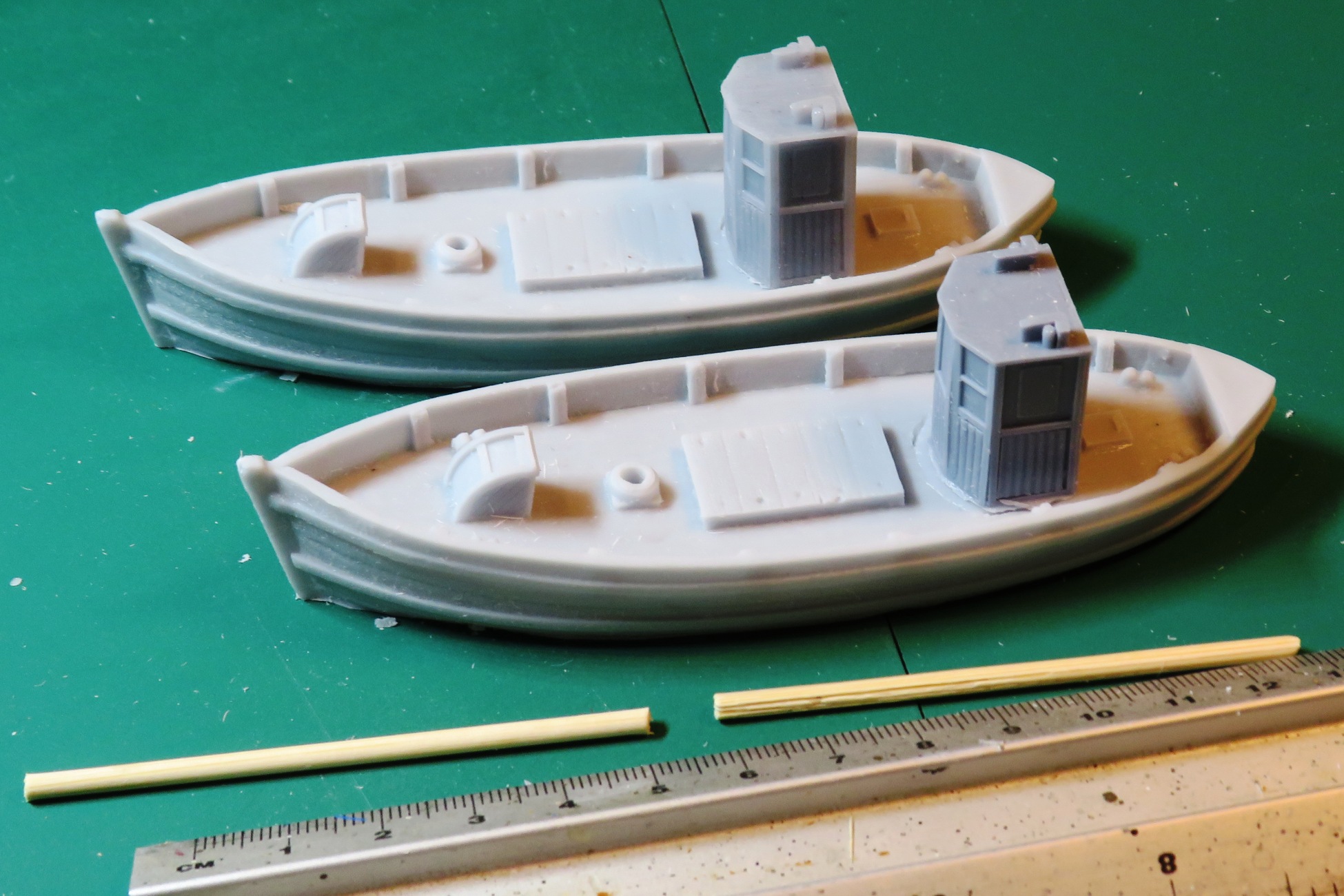
Although I originally intended to scratch build all the buildings etc., on my model railway layout, one of the YouTube model railway channels that I follow (Budget Model Railways*) mentioned a supplier of reasonably-priced, resin-cast items that they used. As a result, I visited Anyscale Models

Please click on the above to see a large image of the front page of the Anyscale Models website.

… and bought a whole load of stuff that I will be able to use on my layout and for wargaming.

My order arrived on Wednesday and included the following items:

Industrial building or tool shed (£5.50)

Waiting rooms (£5.50 each)

Trackside worker's hut (£6.00)

Tin shed (£7.00)

Garden sheds (2 for £6.00)

Canal footbridge (£8.99)

Open air coastal concrete emplacements (£4.00 each)

5.5-inch/6-inch naval guns (£3.00 each)

Battery observation post for the gun emplacements (£5.00)

Three WW2 British pillboxes (£10.00)

Victorian steam launch (£10.00)

Dumb barges (£7.00 each)

31.5' Scottish Motor Fishing Vessels (£7.50 each)

32' Scottish Motor Fishing Vessel (£7.50)

They generously included a couple of free 'seconds' that were made from resin that they had over suring the manufacturing process.

I have included a ruler in the above images to give some idea as to the size of each item.

I was very impressed with the quality of the items I bought, the price I was charged, and the speed with which my order was completed and posted to me. I will certainly be buying from Anyscale Models again in the future.


* Budget Model Railways also produce a small range of 3D printed model railway products.

Friday, 12 January 2024

The MF&FMLR model railway project: The Brennan Torpedo Launching Station

From what I can gather, the Brennan torpedo was launched from its launch station down a rail that was attached to a concrete ramp. The launching station had a 40ft/12m tall hydraulically-extended, telescopic control tower in which the torpedo's operator sat. The operator was equipped with a special pair of binoculars on which were mounted the electric controls for the twin winding engines that were used to both power and steer the torpedo. Using the binoculars, the operator followed the track of the torpedo and steered it towards the target with a considerable degree of accuracy. In fact, tests showed that an operator could hit a target at a range of 2,000 yards (1,800m) and was able to turn the torpedo through 180° to hit a head on target from the side.

To build my Brennan torpedo launching station I decided to make the structure as simple and easy to construct as possible. My starting point was a small wooden box that was sold in THE WORKS for the princely sum of £1.50!

I removed the top (which I put to one side for possible use later) and filled in the screw holes using PVA and sawdust.

I then added an entry hatch (made from thin plywood) for the crew and any torpedoes stored in the launch station ...

... and a smaller hatch (also made from thin plywood) through which the torpedo could be launched.

I then added the telescopic control tower. This was made from several discs of wood and was in the down (i.e. not extended) position.

The whole thing was then given two coats of PVA to seal the wood.

The next stage was to build the launching ramp. This was made from two short sections from a tongue depressor, a small piece of thin basswood, and some matchsticks.

The basswood was cut in the shape of a trapezoid and trimmed so that the two lengths cut from the tongue depressor can fit either side of it in the cutout section of the riverbank where the Brennan Torpedo Launch Station was to be located.

The underneath of the river end of the trapezoid was then gently sanded so that there was only a small gap between the top of the trapezoid and the surface of the river. The two pieces of tongue depressor were then glued to the sides of the trapezoid using Superglue so as to form a sloping ramp. Once this was dry, two lengths of matchstick were stuck along the centre of the ramp using Superglue to form the torpedo launch rails.

Once the glue was dry, the excess lengths of matchstick were carefully cut off and the whole thing was given two coats of PVA to seal the wood.

Before the Brennan torpedo launching station and launching ramp were painted, both were offered up to ensure that everything fitted properly.

The Brennan torpedo launching station and launching ramp were then painted. The building and ramp were concrete and were therefore painted with Reeves acrylic medium grey and then overpainted with a light coat of Humbrol matt acrylic light grey (No.64). The two hatches were painted green, and the launch rails were painted black with silver top edges.

The launch ramp was then glued in place using Superglue and a wooden lug was positioned where the Brennan torpedo launching station will sit when the model railway is in operation. (The launching station is removable for storage purposes.)

The completed Brennan torpedo launching station and launching ramp look like this:


Please note that the design of my Brennan torpedo launching station and launching ramp is purely conjectural and based on a number of photographs of the remains of original structures, some of which were considerably altered when the torpedo was taken out of service.

Thursday, 11 January 2024

A long, hard think about my future wargaming

Long ago I discovered that the act of writing down one’s thoughts helped to organise them into something reasonably coherent, and this is what I have done in this blog post. As a result, the following blog post is undoubtedly a bit self-indulgent as it looks at where I have been, where I am, and what I want to do next. No doubt some of my regular blog readers will find it interesting, but if they don’t, I won’t be mortally offended.

In 2020 I was bowling along feeling that as a retired person the world was my oyster. I was enjoying my wargaming and felt that for the first time in my life I had a set of basic rules – the PORTABLE WARGAME rules – that would no doubt provide me with many years of enjoyment. I had loads of projects I could develop as the mood took me, I was a published author, and I owned several sizeable collections of toy soldiers in a variety of scales … and then I took a bowel cancer test.

The test indicated that there was the possibility of me having cancer in my digestive tract, and a colonoscopy was duly organised for me. This indicated that I had what looked like a cancerous polyp in my colon and several other polyps that might also be cancerous. After a consultation with a consultant colorectal surgeon it was decided that a short, keyhole procedure was required to remove the affected section of my colon, and I was admitted to University Hospital, Lewisham on Wednesday 2nd December 2020 for said operation. At the time, London was in Tier 2 Lockdown due to the ongoing COVID pandemic, but I wasn’t too worried as I expected to be home by the weekend.

I was admitted to hospital at 7.30am, and by 8.30am I was changed into my gown and waiting to be anaesthetised. This turned out to be somewhat problematic as I was to be given both a local and a general anaesthetic, and – due to my scoliosis – the consultant anaesthetist had problems finding somewhere to inject the local anaesthetic into my lower back. After about thirty minutes they succeeded, and that was the last thing I remembered until I woke up twelve hours later in the High Dependency section of the colorectal surgery unit.

Unknown to me, the keyhole surgery had not been successful. In fact, I had been on the operating table for nine hours! It appears that the removal of the short section of affected colon had gone according to plan, but that when they had tried to reconnect the two sections, it proved impossible. Three attempts were made, at which point the senior consultant colorectal surgeon and consultant anaesthetist decided that the safest option was to open me up and perform a colostomy … which is why, when I did wake up, I had a stoma bag.

I stayed in hospital for a week, during which time I was moved to a single room in the colorectal surgery unit and was shown how to change my stoma bag. I was also given some physiotherapy as my body – and particularly the stomach muscles – had been weakened by the surgery that had been performed on me.

The Christmas of 2020 was only marred by repeated problems with the dressing that I had over my large, T-shaped surgery scar on my lower abdomen. I had been fitted with a special type of dressing – a PICO dressing – that used a small amount of suction to keep it in place, but the pump that maintained the suction kept failing, and after several trips back to the hospital it was removed and replaced by a more traditional dressing. At first, this was replaced on a daily basis by a member of the District Nursing team but eventually they passed me over to the Nurse Practitioner at my local GP practice, who changed it three times, then twice, and finally once a week as the wound began to heal. Whilst this was happening, London had moved from Tier 3 to Tier 4 and finally into Full Lockdown.

A few further complications arose during this period. My wound got infected twice, and on both occasions, I had to take a course of antibiotics to help clear it. The wound had finally healed by Friday 5th March 2021, and although I found the stoma inconvenient, it was something that I had learned to live with. (I had been told just after the operation that the procedure might be reversible, but by March it was becoming obvious that this wasn’t very likely.)

The lockdown finally ended in July 2021, and I hoped that my life would eventually return to something approaching normal. Unfortunately this was not to be.

As 2021 became 2022, my health continued to give me cause for concern. I had been warned that the surgery I had undergone might affect me in a number of ways, and it became apparent that my urinary system was not functioning as it should. I spoke to my GP, and he decided that the matter needed further investigation. On Friday 4th March 2022 I had an ultrasound scan on my bladder at the Queen Elizabeth Hospital, Woolwich. As a result of the scan I was asked to attend a meeting with the consultant urologist at the hospital on Wednesday 23rd March … and she admitted me as an emergency then and there!

It transpired that I had developed a partial blockage in my prostate, and this was causing urine to back up in my system to such an extent that my kidneys were on the verge of rupturing. I was kept in hospital for a week, during which time I was fitted with a catheter and my system was allowed to recover.

I returned home with both a catheter and my stoma bag, and I must admit that at times I found it rather difficult to think positively about the future. I had begun to feel old and infirm – especially when trying to climb stairs – and the debilitating effect of the situation on my physical stamina was very hard to cope with.

On Thursday 14th April I was officially diagnosed as having prostate cancer, and on 19th of that month I began the treatment that was designed to halt its further growth and spread. A colonoscopy on Friday 29th April confirmed that I had no cancer in my colon or bowel and a bone scan on 12th May showed that the cancer had not spread to my skeleton.

On 1st June 2022 I underwent a TURP (Transurethral resection of the prostate) at University Hospital Lewisham and was allowed home the next day. This procedure meant that I no longer had to wear the catheter and I was also able to urinate normally, although this remained more than a bit painful for some months to follow.

The consultant oncologist who was overseeing the treatment for my prostate cancer was happy that the TURP and my ongoing course of chemotherapy drugs had stopped the growth of my cancer but was concerned that it had spread to two nearby lymph nodes. He was also concerned that my thyroid was not functioning properly, and an ongoing course of Levothyroxine was prescribed.

The spread of the prostate cancer to the lymph nodes was confirmed by MRI and CT scans, and I was referred to the Guy’s Hospital Radiotherapy Unit at Queen Mary’s Hospital, Sidcup. I was initially seen by the consultant radiologist at the unit on Monday 14th November 2022, when the processes involved in radiotherapy treatment were explained to me. I saw them again on Monday 16th January 2022, and finally on Monday 31st July 2023, at which point I was told that my treatment would begin within a month. I then had several appointments at Guy’s Hospitals Cancer Care Unit during August 2023 in preparation for my radiotherapy, and it was at this point that I was informed that I would be undergoing thirty-seven treatment sessions.

My treatment began on Thursday 31st August 2022 (it should have begun on Tuesday 29th August but one of the linear accelerators was being serviced) and nine weeks later – on Monday 23rd October – they came to an end. As yet, the success or otherwise of this treatment has to be determined, but the results should be known by the end of January 2024.

The last three years have drained me emotionally and physically, and I seem to have very little physical stamina these days. I am – however – slowly beginning to recover, and I try to walk at least a mile each day. My ability to concentrate has begun to improve, and over recent weeks I have begun to feel far more positive.

The effect of the above has been to make me re-examine my future. My doctors tell me that if the treatment has been successful – and they gave me no expectation that it would not be – and I continue to take the cancer drugs that I am on, I have at least another ten years of life ahead of me. So, how do I hope to fill those next ten years?

To answer that question, I have to look at where I am with regard to life in general and wargaming in particular.

First and foremost, it has become apparent that our present house is no longer suitable to meet my needs. Climbing the stairs has become a major problem that has not been helped by the arthritis in my knees and feet and the surgery to my abdomen. Sue and I have therefore taken the decision that, once life has become a little more settled, we will move to somewhere that will be more suitable, such as a bungalow or to a two-storey house with a straight staircase that we can have fitted with a chairlift.

I had already begun to downsize my wargame collections after my colostomy. This was partially due to the realisation that I just had too much stuff to use and store and partially because I had already realised that at some point in the future Sue and I were going to have to move house … and our new home was likely to be smaller than our existing one.

So far I have divested myself of my entire 15mm Axis and Allies Miniatures collection, almost all of my 15mm Peter Laing figures, all of my painted 30mm British and French Napoleonic figures, and a large number of books and unmade model kits. What I have left is my 15mm Belle Époque imagi-nation collection, the 15mm Colonial figures I had painted some twenty years ago for my Mankanika, Dammallia, and Marzibar campaigns, a large number of 20mm Eastern Front/Great Patriotic War figures, vehicles, and aircraft, and my 25/28mm pre-painted Del Prado Napoleonic collection. None of these collections is by anyway totally complete, but even incomplete I have enough to keep me going for many years. That said, the last two could easily be rationalised and the second could be rebased so that it is compatible with the Belle Époque collection.

To help me to assess what further downsizing I can undertake, I have looked back over the past three years to see what has given me the greatest wargaming pleasure and to use that as a guide to the choices I will make.

So, what has given me the greatest pleasure? In no particular order, the answers are as follows:

  • The Franco-Prussian War of 1810 Napoleonic Campaign that I fought online with my good friend Professor Gary Sheffield. The simple campaign system I devised using the game board/map from Waddington’s old CAMPAIGN game and the Fast-Play 3 x 3 Portable Napoleonic Wargame rules that we used made it possible to fight a fun campaign with lots of battles and minimal recordkeeping.
  • Developing my Belle Époque imagi-nation collection. As I get older, I seem to be drawn more and more to the period of history when the European empires were at their height, both within Europe as well as in Africa and Asia. If one can distance oneself by making these imagi-nations (or should that be imagi-empires?), it becomes easier to circumvent the more unsavoury aspects of the period. The period also appeals because the technology that was used was basically similar across the powerful nations, thus making it possible to write relatively simple wargame rules that will give me enjoyable battles and campaigns to fight.
  • Rebasing my Eastern Front/Great Patriotic War collection. I began this project during the long COVID lockdown, and it was part of an unfulfilled ambition to emulate Lionel Tarr’s the long-running campaign. In fact, I think that I have nearly as much in the way of figures etc., that he had … and I still have boxes and boxes of figures and models that remain to be renovated, painted, or based. Truth be told, I could probably dispose of at least 50% of what remains and still have more than enough to last me a lifetime.
  • Building my 009 narrow gauge model railway. This has been a long-standing ambition and has almost come to fruition. Although it is not directly a wargaming project, it draws heavily upon what I have learned as a wargamer (e.g. terrain modelling skills and extrapolating from historical examples to create reasonably realistic backstory) and has given me many hours of enjoyment.
  • Helping other wargamers to develop their own versions of the PORTABLE WARGAME system. This is partially down to my having been a teacher. I always wanted my students to ‘get it’ and to then make the knowledge they had gained their own … and this has certainly happened with the PORTABLE WARGAME.
  • Discovering SHAMBATTLE and developing the concept so that it worked with the PORTABLE WARGAME rules. This is the most recent of the above and – to my mind – has lots of potential.

I have been mulling what my future wargaming priorities should be for some time. Until very recently I was still very undecided … and then I read an obituary about the late John Ruddle’s garden wargaming, and things began to fall into place.

In the obituary, the wargaming part of John’s garden was described as being L-shaped, with a long left-hand border that was split into Britain, France, Germany, Belgium, and Italy. At right-angles to this and across the bottom of the garden were sections that represented Africa and the Northwest Frontier of India. At the join of the two section was Turkey, and the lawn represented the oceans. My immediate reaction was ‘I’d love to do something like that, but my garden isn’t suitable.’ However, after some thought, I decided that an indoor version of something like it might be possible.

My current thinking is along the lines that I could create a terrain board for each of my Belle Époque imagi-nations using the game board/map from Waddington’s CAMPAIGN game as a guide. These terrain boards could be stored in my future wargame/toy room and be brought out and used as and when required. It would allow me to exercise my terrain modelling skills (something that I have recently rediscovered and that I really do enjoy!) and become the basis of an imaginary wargaming world where nations – both large and small – are constantly vying with each other.

If I were to go down this route, my Eastern Front/Great Patriotic War and Napoleonic collections would be relegated to being second rank collections, but as they are probably going to be downsized anyway and my Belle Époque collection plus a few other bits and pieces that I have in storage are probably big enough for project I have outlined, it answers some of the conundrums I have been facing.

Having written all this, I have yet to make a firm decision, but it is a plan of sorts, and it will give me hours of fun just thinking about it. Will it come to fruition, or will I change my mind? I have no idea, but whatever happens, you can bet your bottom dollar that I’ll blog about it!
Wednesday, 10 January 2024

Sealing Their Fate: 22 Days That Decided the Second World War

My good friend Tony Hawkins sent me a copy of SEALING THEIR FATE: 22 DAYS THAT DECIDED THE SECOND WORLD WAR for Christmas and I have been reading it since I got back from our recent cruise.

The book covers the period from Monday, November 17th to Monday, December 8th during which time the Japanese Navy sailed from Japan to Hawaii to mount their attack on Pearl Harbor, the German attempt to capture Moscow stuttered to a halt, and Operation Crusader took place in North Africa.

This day-by-day account looks at the war at several different levels. Not only does the author explain what decisions were being made at the highest levels but also how events were unfolding for individual participants. As such, it helps the reader to get some idea of just what it must have been like to have lived through that crucial period when things might have gone very differently.

I thoroughly enjoyed reading it, and although there are no new revelations or insights, I came away with a better understanding of why these three weeks were so important to the eventual outcome of the war.


SEALING THEIR FATE: 22 DAYS THAT DECIDED THE SECOND WORLD WAR was written by David Downing and published by Schuster & Schuster in 2009 (ISBN 978 0 3068 1620 8).

Tuesday, 9 January 2024

The MF&FMLR model railway project: The final track plan? I think so ...

I spent quite some time playing around with various track plans, some of which were quite complicated. In the end I have decided to stick with something that is simple but works ... an oval with a single siding.

The track plan looks like this:

(N.B. The wires that provide to power to the tracks and control the point/turnout to the siding will be hidden when the track is actually fixed to the baseboard.)

This allows me space to add several buildings, including a coastal defence fort (NOT the Airfix one, although I did toy with the idea!), a Brennan Torpedo Launching Station, and several small railway halts (i.e. small stopping stations that usually consist of a simple platform and small station building).

Monday, 8 January 2024

Britannia's Interests: The newest addition to the Dawlish Chronicles

Just before Christmas, the latest addition to Antoine Vanner's DAWLISH CHRONICLES was published and I was able to read it during our recent cruise.

The latest book deals with the end of the so-called Maximilian Adventure, when the French Empire under Napoleon III sought to make Emperor Maximilian I (the former Austrian Archduke Ferdinand Maximilian Josef Maria von Habsburg-Lothringen​, the younger brother of Franz Josef I) as ruler of Mexico against the wishes of the majority of the population who support the democratically-elected former President of Mexico, Benito Juarez.

Sub Lieutenant Dawlish is serving as the junior officer aboard the Royal Navy gunvessel HMS Sprightly, which is part of the British Pacific Station based at Esquimalt in Canada. During the story the ship is patrolling the Pacific coast of Mexico and is charged with looking after British interests in the area ... which include a railway and a silver mine.

The Imperial Mexican Navy has an ironclad (the French-built Quetzel) operating in the same area, and the story deals with the collapse of Imperial Mexican power on Mexico's Pacific coastline and the Royal Navy's role in protecting British interests without sparking off a war with either side in the Mexican internal conflict. There's lots of shenanigans involving ex-Confederate mercenaries, the Belgian Volunteer Legion, the French Imperial Army, the Mexican Imperial Army and Navy, Mexican bandits, the Juaristas, a former sweetheart, corruption, and silver!

The thing that marks out Antoine Vanner's work is the level of background research he does into the history, politics, and technological developments of the era, and his books are worth reading for that alone.


The twelve books in the series that have been published to date are (in chronological order):

  • BRITANNIA’S INNOCENT: THE DALISH CHRONICLES: FEBRUARY 1864 – MAY 1864
  • BRITANNIA’S INTERESTS: THE DAWLISH CHRONICLES: JULY 1866 – NOVEMBER 1866
  • BRITANNIA’S GUILE: THE DAWLISH CHRONICLES: JANUARY 1877 – AUGUST 1877
  • BRITANNIA'S WOLF: THE DAWLISH CHRONICLES: SEPTEMBER 1877 – FEBRUARY 1878
  • BRITANNIA'S REACH: THE DAWLISH CHRONICLES: NOVEMBER 1879 – APRIL 1880
  • BRITANNIA'S SHARK: THE DAWLISH CHRONICLES: APRIL 1881 – SEPTEMBER 1881
  • BRITANNIA'S SPARTAN: THE DAWLISH CHRONICLES: JUNE 1859 AND APRIL 1882 – AUGUST 1882
  • BRITANNIA'S AMAZON: THE DAWLISH CHRONICLES: APRIL 1882 – AUGUST 1882
  • BRITANNIA'S MISSION: THE DAWLISH CHRONICLES: AUGUST 1883 – FEBRUARY 1884
  • BRITANNIA'S GAMBLE: THE DAWLISH CHRONICLES: MARCH 1884 – FEBRUARY 1885
  • BRITANNIA’S MORASS: THE DAWLISH CHRONICLES: SEPTEMBER 1884 – DECEMBER 1884
  • BRITANNIA’S RULE: THE DAWLISH CHRONICLES: SEPTEMBER 1886 – APRIL 1888


BRITANNIA’S INTERESTS: THE DAWLISH CHRONICLES: JULY 1866 – NOVEMBER 1866 was written by Antoine Vanner and published in 2023 by Old Salt Press (ISBN 978 1 9434 0447 6) and can be purchased via Amazon.

Sunday, 7 January 2024

The MF&FMLR model railway project: The River Thames (Part 2)

Having varnished the water, I then dealt with the water's edge. I looked at photographs of the parts of the Mucking Flats and Fobbing Marsh where they meet the River Thames, and they showed that it is basically grassy with some low bushes. I therefore decided to use a similar method to the one that I used to create my marsh.

I carefully applied PVA glue where the water of the River Thames met the land and sprinkled a layer of green flock (a mixture of K&M Trees No.1 Grass Green and K&M Trees No.7 Dark Green) over it. I then let that thoroughly dry before using a desk vacuum cleaner to remove the excess flock. In order to ensure that the coverage was as thick and regular as possible, I repeated the process for a second time.

To create the tussocks of grass and low bushes, I decided to experiment with making them before I applied them to my layout baseboard. The method I used was as follows:

  1. I blobbed small amounts of PVA glue on two separate thin plastic pieces of plastic.
  2. The one I used for the tussocks of grass had four rows of six blobs, over which I scattered Noch Spring Meadow (50210) static grass.
  3. The one I used for the low bushes had three rows of five slightly larger blobs, over which I scattered what was left of the green foam that I made when I created the marsh areas on my layout.
  4. Once the PVA glue was dried, I applied a second blob of PVA glue to each of my existing grassy tussocks and low bushes and covered each with another layer of static grass or foam.
  5. Once the PVA glue was dried, I applied a mixture of 50% PVA and 50% water (with a tiny drop of washing up liquid added to it) on every clump of foam, using my trusty syringe to do this. This had the effect of hardening the foam.

The end results looked like this:

Tussocks of grass.
Low bushes.

I have made more than I actually need but as the tussocks of grass and clumps of bracken remain stuck to the plastic sheet, I can store them for future use on this or future projects.

I then glued a number of tussocks of grass and low bushes to the area next to the River Thames using PVA. Once the PVA had dried I then applied a mixture of 50% PVA and 50% water to the whole area, and once that had dried it looked like this:

I'm not quite sure what part of my model railway I will deal with next, but I suspect that I might want to 'firm up' the actual track layout before I add any more terrain features.

Saturday, 6 January 2024

Nugget 359

I collected the latest issue of THE NUGGET from the printer (Macaulay Scott Printing Company of Welling, Kent) yesterday and I will be posting it out to members by Monday.

I have sent the PDF copy to the webmaster, and members should be able to read this issue of THE NUGGET online by the time that this blog post is uploaded.


IMPORTANT: Please note that this is the fifth issue of THE NUGGET to be published for the 2023-2024 subscription year.

If you have not yet re-subscribed, an email reminder was sent to you some time ago with the relevant information you require to do so. If you have lost this and wish to re-subscribe or you are a new subscriber, please request a PayPal invoice or the bank transfer information from the Treasurer or follow the instructions on the relevant page of the website.