Pages

Thursday, 14 November 2024

The US Navy’s post-Civil War Monitors (Part 1)

At the end of the American Civil War the United States Navy had a total of four River Monitors, twenty-one Harbour Monitors, nineteen Coastal Monitors, and eleven Seagoing Monitors. The first two categories were disposed of in the years after the war ended.

The Coastal Monitors were the Passaic, Canonicus, and Milwaukee-classes. The ships of the latter class - which were riverine monitors capable of operating in coastal areas - were sold off by 1875, but the first two classes were kept in reserve and recommissioned during the Spanish-American War. With the exception of the USS Camanche - which was based in California - they were used to protect ports on the eastern coast of the United States from possible attacks by the Spanish Navy.

USS Camanche during the Spanish-American War.

The Passiac-class monitors (USS Passaic, USS Montauk, USS Nahant (renamed USS Atlas in June 1869 and reverted to her original name in August 1869), USS Sangamon (renamed USS Jason in June 1869), USS Patapsco (sunk by a mine in January 1865), USS Weehawken (sank during a gale in December 1863), USS Catskill (renamed USS Goliath in June 1869 and reverted to her original name in August 1869), USS Nantucket (renamed USS Medusa in June 1869 and reverted to her original name in August 1869), USS Lehigh, and USS Camanche) were improved versions of the USS Monitor. They were initially armed with one 15" and one 11" Dahlgren smooth-bore cannon or 8" Parrot gun in their single turret, but the 11" and 8" guns were later replaced by a second 15" one.

The Canonicus-class (USS Canonicus, USS Ajax (originally named USS Manyunk), USS Catawba (sold to Peru after completion and renamed Atahualpa), USS Mahopac (renamed USS Castor in June 1869 and reverted to her original name in August 1869), USS Manhattan (renamed USS Neptune in June 1869 and reverted to her original name in August 1869), USS Oneota (sold to Peru after completion and renamed Manco Capac), USS Saugus (renamed USS Centaur in June 1869 and reverted to her original name in August 1869), USS Tecumseh (sunk during the Battle of Mobile on 5th August 1864), USS Wyandotte (renamed USS Vesuvius in June 1869 and reverted to her original name in August 1869)) were improved versions of the Passiac-class monitors.

USS Lehigh.

The characteristics of the Passiac-class are:

  • Displacement: 1,335 tons
  • Dimensions:
    • Length: 200ft (61m)
    • Beam: 46ft (14m)
    • Draught: 10ft 6in (3.2m)
  • Propulsion: 2 x Martin boilers providing steam to a single-shaft Ericsson vibrating-lever steam engine
  • Speed: 7 knots
  • Complement: 75
  • Armament (when built): 1 x 15-inch (380mm) muzzle-loading smooth-bore Dahlgren gun and 1 x 11-inch (280mm) muzzle-loading smooth-bore Dahlgren gun except for USS Lehigh and USS Patapsco which had 1 x 15-inch (380mm) muzzle-loading smooth-bore Dahlgren gun and 1 × 8-inch (200mm) muzzle-loading Parrott rifled gun and USS Camanche which had 2 x 15-inch (380mm) muzzle-loading smooth-bore Dahlgren guns
  • Armour:
    • Side: 3 to 5-inch (76 to 127mm)
    • Turret: 11-inch (280mm)
    • Deck: 1-inch (25mm)

USS Canonicus.

The characteristics of the Canonicus-class are:

  • Displacement: 2,100 tons
  • Dimensions:
    • Length: 223 to 235ft (68 to 72m)
    • Beam: 43 to 43ft 8in (13 to 13.31m)
    • Draught: 13ft 6in (4.11m)
  • Propulsion: 4 x boilers providing steam to a single-shaft vibrating-lever steam engine
  • Speed: 8 knots
  • Complement: 85
  • Armament: 2 x 15-inch (380mm) muzzle-loading smooth-bore Dahlgren guns
  • Armour:
    • Side: 5-inch (127mm)
    • Turret: 10-inch (254mm)
    • Deck: 1.5-inch (38mm)

The eleven Seagoing Monitors were the USS Dictator, the USS Onondaga, the USS Puritan, the four Miantonomoh-class, and the four Kalamazoo-class.

The USS Dictator remained in service until 1877, and she was scrapped in 1883.

The USS Onondaga was sold back to her builder in 1867, who sold her to France. She remained in service (mostly in reserve) until she was sold in 1904 and scrapped in 1905.

The USS Puritan was never completed and was left on her building stock. By 1874 her hull had deteriorate and she underwent a ‘great repair’. In actuality, she was scrapped in 1874 and the money voted by Congress for her repair was used to build a new monitor with the same name.

The Miantomomoh-class (USS Miantomomoh, USS Agamenticus (renamed USS Terror in June 1869), USS Monadnock, and USS Tonawanda (renamed USS Amphitrite in June 1869)) were supposed to undergo ‘great repair’, but they were scrapped in 1874 and 1875 and the money used to build new monitors.

The Kalamazoo-class (USS Kalamazoo (renamed USS Colossus in June 1859), USS Passaconaway (renamed USS Thunderer in June 1859 and USS Massachusetts in August 1859), USS Quinsigamond (renamed USS Hercules in June 1859 and USS Oregon in August 1859), and USS Shackamaxon (renamed USS Hecla in June 1859 and USS Nebraska in August 1859)) were incomplete when the Civil War ended and were left on their building stocks. They were renamed in June 1869 and again in August 1869, but they remained there until they were scrapped in 1874 (USS Shackamaxon/Hecla/Nebraska) and 1884 (the remaining three ships of the class).

USS Dictator.

The characteristics of the USS Dictator are:

  • Displacement: 4,438 tons
  • Dimensions:
    • Length: 312ft (95.1m)
    • Beam: 50ft (15.2m)
    • Draught: 20ft 6in (6.2m)
  • Propulsion: 2 x vibrating-lever steam engines, each powering a propeller
  • Speed: 10 knots
  • Complement: 174
  • Armament: 2 × 15-inch (380mm) muzzle-loading smooth-bore Dahlgren guns
  • Armour:
    • Side: 6-inch (152mm)
    • Turret: 15-inch (381mm)
    • Deck: 1.5-inch (38mm)
    • Pilothouse: 12-inch (305mm)

The ex-USS Onondaga in French service.

The characteristics of the USS Onondaga are:

  • Displacement: 2,592 tons
  • Dimensions:
    • Length: 226ft (68.9m)
    • Beam: 50ft 5in (15.7m)
    • Draught: 12ft (3.9m)
  • Propulsion: 4 x water-tube boilers providing steam to 2 x back-acting steam engines, each powering a propeller
  • Speed: 7 knots
  • Complement: 130
  • Armament: 2 x 15-inch (380mm) muzzle-loading smooth-bore Dahlgren guns and 2 x 150-pounder muzzle-loading Parrot rifled guns
  • Armour:
    • Side: 5.5-inch (140mm)
    • Turret: 11-inch (279mm)
    • Deck: 2-inch (51mm)

An artist's impression of how the USS Puritan would have looked had she been completed..

The characteristics of the USS Puritan (as designed) are:

  • Displacement: 4,912 tons
  • Dimensions:
    • Length: 340ft (103.6m)
    • Beam: 50ft (15.2m)
    • Draught: 20ft (6.1m)
  • Propulsion: 6 x Martin water-tube boilers providing steam to a two-cylinder vibrating-lever steam engine powering two propellers
  • Speed: 15 knots
  • Armament: 2 x 20-inch (508mm) muzzle-loading smooth-bore Dahlgren guns
  • Armour:
    • Side: 6-inch (152mm)
    • Turret: 15-inch (381mm)
    • Pilothouse: 12-inch (306mm)

A Miantomomoh-class monitor during the American Civil War.

The characteristics of the Miantonomoh-class are:

  • Displacement: 3,400 tons
  • Dimensions:
    • Length: 258ft 6in (78.8m)
    • Beam: 52ft 9in (16.1m)
    • Draught: 12ft 8in (3.9m)
  • Propulsion: Steam engines powering two propellers
  • Speed: 10 knots
  • Complement: 150 to 167
  • Armament: 2 x 15-inch (380mm) muzzle-loading smooth-bore Dahlgren guns
  • Armour:
    • Side: 4.5-inch (114mm)
    • Turret: 11-inch (279mm)
    • Deck: 1.5-inch (38mm)
    • Pilothouse: 8-inch (203mm)

An artist's impression of how the Kalamazoo-class monitors would have looked had they been completed.

The characteristics of the Kalamazoo-class (as designed) are:

  • Displacement: 5,600 tons
  • Dimensions:
    • Length: 345ft 5in (105.3m)
    • Beam: 56ft 8in (17.3m)
    • Draught: 17ft 6in (5.3m)
  • Propulsion: 8 x tubular boilers providing steam to 2 x two-cylinder horizontal direct-acting steam engines, each powering a propeller
  • Speed: 10 knots
  • Complement: 150 to 167
  • Armament: 2 x 2 x 15-inch (380mm) muzzle-loading smooth-bore Dahlgren guns
  • Armour:
    • Side: 6-inch (152mm)
    • Turret: 10 to 15-inch (254 to 381mm)
    • Deck: 3-inch (76mm)

Tuesday, 12 November 2024

My Belle Époque armies

Whilst I was feeling somewhat under the weather after my recent 'flu and COVID jabs, I did manage to sort out my Belle Époque armies and label each unit base with a small self-adhesive 25mm x 10mm laser-printed label. I also moved them from storage in a variety of different plastic boxes and onto A4-sized self-adhesive magnetic sheets that had been fixed to 3mm-thick sheet of plywood.

As I did this, I took the opportunity to photograph each army:

Republic of Burgundy

Kingdom of Schwarzenberg

Sultanate of Khakistan

Emirate of Khyberistan

Principality of Hyderapore

Sultanate of Sahel

Principality of Stalbania

Khedivate of Zubia

Sultanate of Harabia

The majority of the figures are from the Colonial ranges produced by Essex Miniatures, but there are also a significant number from Miniature Figurines (mainly the Burgundian infantry, which are from the American Civil War range, and the Stalbanians, which are from the American World War I range), and Irregular Miniatures (the Khyberistanis, which are from the Colonial range). Most of the artillery pieces were manufactured by Peter Laing Miniatures.

Some of these figures have been in my collection for a very long time. For example, I painted what are now the Burgundian and Schwarzenberg infantry in the early 1980s and acquired the bulk of the Essex Miniatures in the late 1990s. The latter were already painted and were supplied by a company whose name I cannot recall.


An associated YouTube video will be available later today.

Monday, 11 November 2024

The eleventh hour of the eleventh day of the eleventh month

Today marks the one hundred and sixth anniversay of the Armistice that ended the fighting on the Western Front.

'They shall grow not old, as we that are left grow old:
Age shall not weary them, nor the years condemn.
At the going down of the sun and in the morning,
We will remember them.

When You Go Home, Tell Them Of Us And Say,
For Their Tomorrow, We Gave Our Today.’

We will remember them.

The poppy wreaths at St George's Garrison Church, Woolwich, on Remembrance Sunday 2024.

Sunday, 10 November 2024

Service of Remembrance

This morning Sue and I will be attending the Service of Remembrance at St George’s Garrison Church, Woolwich.

Photo © Ethan Doyle White.

We went last year, and it was a very moving occasion, and despite the fact that it was cold and wet, we felt spiritually uplifted by the service.

Friday, 8 November 2024

Parallel evolution

I was recently emailed by Andrew Rolph about the recent developments of the Hare & Hounds mini-campaign board. He is a fellow wargame designer and is currently working on a book and game that covers the first few days of Operation Barbarossa in Ukraine. One major stumbling point he has had to contend with is the difficulty of finding a decent map of the area over which to manoeuvre units prior to fighting the resulting battles on a tabletop. In the end, the resulting design has become a standalone boardgame ... that uses a campaign mapboard that is very similar to the Hare & Hounds mini-campaign board. As he concludes in his email, this is an example of what is called parallel evolution.

His mapboard looks like this ...

... and it certainly does resemble the Hare & Hounds mini-campaign board.


This has certainly given me something to think about and will influence the design of my future Hare & Hounds mini-campaign boards.


Andrew Rolph has four books currently available from Wargame Vault. These are:

Kharkov, May 1942 - The Last Disaster

Barbarossa - Kicking in the Door...

Grey Steel, Red Storm - Regimental Scenarios in the Soviet Union 1941-1943

Hegemon

They are excellent books, and I thoroughly recommend them.


Please note that the images featured above are © Andrew Rolph.

Wednesday, 6 November 2024

‘We feel just as heavy as lead …’

On Monday afternoon Sue and I had our annual ‘flu jabs and COVID booster jabs … and on Tuesday we both felt under the weather. Neither of us seemed to have any energy or motivation to do anything, and Sue summed it as feeling as if our bodies just felt heavy.

Judging by what I’ve read on the Internet, the current ‘flu jab seems to have this as a common side effect and this feeling should pass in a couple of days. In the meantime, I’m trying to motivate myself to do my daily exercises and do some sorting out in my toy/wargameroom.


The title of this post comes from the chorus of the song ‘Oh! What a Lovely War’.

Oh! Oh! Oh! it's a lovely war,
Who wouldn't be a soldier eh?
Oh! It's a shame to take the pay.
As soon as reveille is gone
We feel just as heavy as lead,
But we never get up till the sergeant brings
Our breakfast up to bed
Oh! Oh! Oh! it's a lovely war,
What do we want with eggs and ham
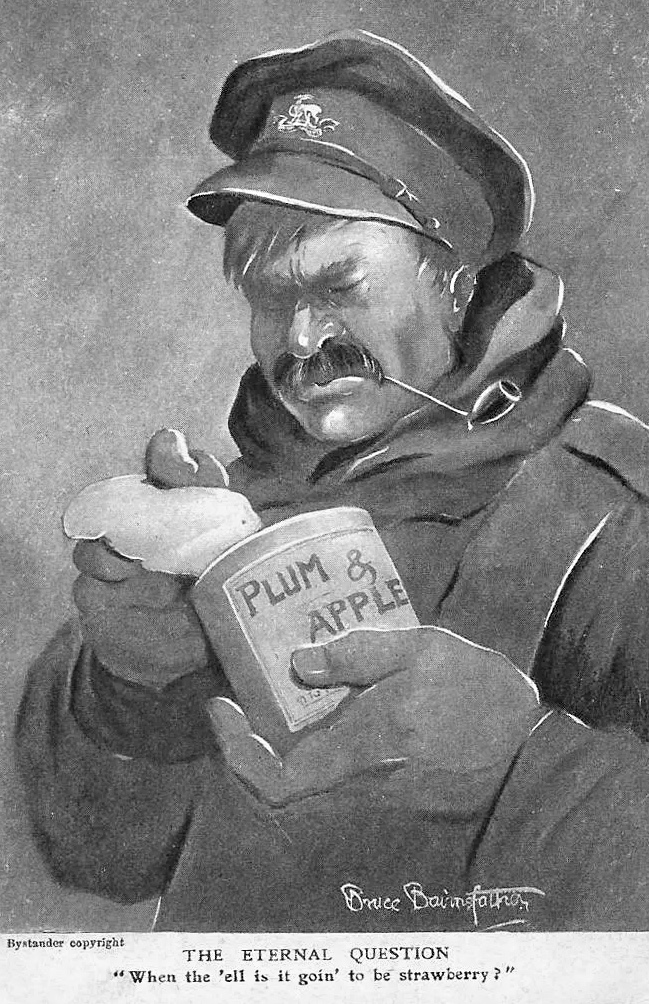
When we've got plum and apple jam?
Form fours! Right turn!
How shall we spend the money we earn?
Oh! Oh! Oh! it's a lovely war.

Monday, 4 November 2024

Taking a stroll …

My mobility has been gradually improving over the last fortnight, in no small part due to support by a therapy assistant from the Royal Borough Greenwich Community Rehabilitation and Short Term Assessment Team. They have encouraged me to try doing things that I was unsure that I’d still be able to do, and as a result I have learned how to get in and out of Sue’s car, and this has enabled me to get out and about.

They also provided me with a stroller so that I can use it to walk further and faster than I’ve been able to just using my walking stick. The stroller has four wheels, the front two being able to rotate so that it can be steered. It also has handbrakes and a seat so that if I feel tired, I can lock the brakes and sit down to rest and recuperate.

To date I’ve used the stroller twice to go up to the local postbox, which is some distance uphill from our house. Sue and I have also managed to get the stroller into the back of her car so that we could go to Charlton Park for a walk … followed by lunch in the cafe - Frilly’s - inside Charlton House.

With luck, using the stroller will help to improve my ability to walk as well as giving me the sort of exercise that will gradually improve my stamina.

When I look back at how far my mobility has improved over the past two months, I’ve gone from being a bed bound patient who had to be washed and dressed by carers and hoisted in and out of bed to someone who can get out of bed unaided, who can wash and dress themselves, and who can walk with the aid of a walking stick and a stroller.

One wonders how much better my mobility will be by Christmas.

Sunday, 3 November 2024

The United States’ response to the late nineteenth century South American naval arms race

When the Civil War ended in 1865, the United States Navy had one of the strongest navies in the world. Admittedly, the fleet was not a deep water one, and mainly comprised armoured monitors and gunboats, but it was capable of defending the nation’s coastline from any potential enemy.

However, by 1880 the active US Navy had shrunk to a fraction of its size fifteen years before, and the growing strength of the Argentinian, Brazilian, and Chilean Navies left it unable to protect the nation’s shores. The matter was debated in the US Congress, and the head of the House Naval Affairs Committee - Hilary A. Herbert - stated that 'if all this old navy of ours were drawn up in battle array in mid-ocean and confronted by Riachuelo (the newly-ordered Brazilian battleship) it is doubtful whether a single vessel bearing the American flag would get into port.'

An internal side view and deck plan of the Riachuelo.
The completed Riachuelo. The similarity of the design of the Riachuelo to that of the USS Maine is apparent.

The Naval Advisory Board had been debating the problem since 1881, and in keeping with the isolationist policies propounded by successive administrations, the Board was unable to reach a conclusion. Some members argued for the development of a fleet of fast commerce raiders whereas others argued that some sort of coastal defence forces. The decision by the Brazilians to order the building of the Riachuelo galvanised the Board’s deliberations and plans were drawn up for the building of two modern armoured warships.

The Bureau of Construction and Repair (C & R) - who were responsible for the design, construction, conversion, procurement, maintenance, and repair of ships used by the United States Navy - presented two designs to William Collins Whitney, the Secretary of the Navy. One of the ships was a 7,500 ton battleship and the other was a 5,000 ton armoured cruiser. After some deliberation, the Secretary decided to request that Congress vote funds for the construction of two 6,000 ton warships, and this was authorised in August 1886.

As the design of such large modern ships was at that time beyond the capabilities of the United States, it was decided to hold a design contest. A number of naval architects were asked to submit designs for the two ships, and the resulting designs became the battleship USS Texas and the armoured cruiser USS Maine. (USS Maine is sometimes described as being a second-class battleship.)

USS Texas

The ship's characteristics are:

  • Displacement: 6,316 tons
  • Dimensions:
    • Length: 308ft 10in (94.1m)
    • Beam: 64ft 1in (19.5m)
    • Draught: 24ft 6in (7.5m)
  • Propulsion: 4 x double-ended boilers providing steam to 2 vertical triple-expansion 8,610ihp steam engines, each driving a propellor.
  • Speed:17.8 knots
  • Complement: 392 officers
  • Armament: 2 × 1 12-inch (305mm) Mark 1 L/35 BL guns; 4 × 1 6-inch (152mm) Mark 3 L/30 BL guns; 2 × 1 6-inch (152mm) Mark 3 L/35 BL guns; 12 × 1 QF 6-pounder (57mm) quick-firing guns; 4 × 1 1-pounder (37mm) Hotchkiss 5-barrelled revolving cannons; 6 × single 1-pounder (37mm) Driggs-Schroeder quick-firing guns; 4 × 14-inch (356mm) torpedo tubes
  • Armour:
    • Belt: 12-inch (305mm)
    • Deck: 1 to 3-inch (25 to 76mm)
    • Citadel: 12-inch (305mm)
    • Turrets: 1 to 3-inch (25 to 76mm)
    • Conning tower: 9-inch (229mm)
    • Bulkheads: 8-inch (203mm)

Service history:

Ordered on 3rd August 1886, she was laid down at Norfolk Naval Shipyard, Portsmouth, Virginia on 1st June 1889. She was launched on 28th June 1892 and commissioned on 15th August 1895.

From the start she seemed to be plagued with problems. Several structural flaws were discovered and Texas required time in dry dock to have her hull strengthened. In September 1895 she ran aground off Newport, Rhode Island, and during the repairs that followed, the ship sank at her moorings as a result of flooding caused by a leak. It was discovered that her watertight doors had been left open and other holes in the bulkhead caused by the need for voice pipes and electrical cables to pass through them had exacerbated the situation.

Once raised, repaired, and back in service, Texas was then assigned to the North Atlantic Squadron, which was based in on the eastern seaboard of the United States. During a visit to Galveston, Texas, in February 1897 she got stuck on a mud bank when high winds blew her onto it. With the aid of a tug, she was able to get off and resumed her service with the North Atlantic Squadron.

When the Spanish-American War broke out, Texas sailed to Cuba as part of the Flying Squadron and took part in the blockade of Santiago de Cuba. As a result, she took part in the Battle of Santiago, during which she fired at and damaged two Spanish cruisers (Vizcaya and Cristobal Colon) as well as two destroyers.

After the war, Texas was decommissioned and undertook a long refit at Norfolk Naval Shipyard, during which her funnel and topmasts were raised, the armour on her main ammunition hoists was doubled in thickness, and her side torpedo tubes were removed.

By 1911 Texas was obsolete and she became a target ship. She was renamed San Marcos in February 1911 so that her original name could be assigned to a new battleship. Under that name she served as a target ship until she was sunk in March 1911. After that her superstructure - which remained above the surface - continued to be used as a target and later as a mooring place for a canvas target screen. The remains of her upperworks and upper hull were destroyed by explosives in January 1959 and what is left of her remains in shallow water in Tangier Sound in Chesapeake Bay.

USS Maine

  • Displacement: 6,682 tons
  • Dimensions:
    • Length: 324ft 4in (98.9m)
    • Beam: 57ft (17.4m)
    • Draught: 22ft 6in (6.9m)
  • Propulsion: 8 x single-ended boilers providing steam to 2 x inverted vertical triple-expansion 9,293ihp steam engines, each driving a propellor.
  • Speed: 16.5 knots
  • Range: 3,600 nautical miles
  • Complement: 374
  • Armament:  2 × 2 10-inch (254 mm) Mark 2 L/30 BL guns; 6 × single 6-inch (152mm) Mark 3 L/30 BL guns; 7 × 1 6-pounder (57mm) Driggs-Schroeder quick-firing guns; 4 × 1 1-pounder (37mm) Hotchkiss quick-firing guns; 4 × 1 1-pounder (37mm) Driggs-Schroeder quick-firing guns: 4 × 0.45-inch Gatling machine guns;  4 × 18-inch (450mm) torpedo tubes
  • Armour:
    • Belt: 12-inch (305mm)
    • Deck: 2 to 3-inch (51 to 76mm)
    • Turrets: 8-inch (203mm)
    • Conning tower: 10-inch (254mm)
    • Bulkheads: 6-inch (152mm)

Service history:

USS Maine was ordered on 3rd August 1886 and was laid down at New York Naval Shipyard on 17th October 1888. She was launched on 18 November 1889 but not commissioned until 17th September 1895! This delay was due to problems with the delivery of armour.

Once she had been commissioned and undertaken several trial and tests, Maine joined the North Atlantic Squadron, which was based in Norfolk, Virginia.

In January 1898, USS Maine - which was then operating out of Key West, Florida - was sent to Havana in Cuba to protect American interests during the ongoing Cuban War of Independence. She reached Havana on 25th January, and at 9.40pm on 15th February - whilst she was an anchor inside the harbour - an explosion occurred aboard her that caused her to sink in a matter of minutes. Of the 355 crew, 261 died as a result of the explosion, 78 were injured, and 16 emerged unhurt.

Although the 'New York Journal' and 'New York World' sensationalized the incident, claiming that the ship had been sunk by a bomb or mine placed by the Spanish, a later 1974 investigation conducted by Admiral Rickover concluded that the explosion had occurred in the forward magazine, and was possibly caused by spontaneous combustion in the coal bunker next to the magazine igniting powder stored therein.

Saturday, 2 November 2024

Naval gazing

Over the past few weeks, I’ve been spending a lot of time thinking and writing about late nineteenth and early twentieth century naval history and naval wargaming.

At the age of sixteen it was my ambition to join the Royal Navy and train to be a naval officer … but during a careers interview I was made aware that my eyesight wasn’t good enough to become anything other than an engineer, and I wanted the possibility that I could end up commanding a ship. (During the 1960s engineering officers could not proceed up the career ladder to command a warship. I understand that this situation has not changed.)

I then decided to look at joining the Army, but my scoliosis proved a bar to this career choice. In the end I went into private banking when I left school and eventually, I trained to be a teacher, a career I followed for forty years.

Despite all of these setbacks, I retained my interest in all things naval, and looking at my bookshelves, I have as much space devoted to naval topics as I do to almost everything else. Over the years I’ve taken part in wargames played using Fred Jane’s Naval War Game rules (and created my own set of equipment to fight battles using them) and Fletcher Pratt’s Naval War Game rules. I’ve also written a book of gridded naval wargames and built numerous model wargame ships.

My latest naval research project has involved looking at the various tactics and technologies developed and used by both sides during the Battle of the Atlantic … and I have a suspicion that this might well lead to the development in a game based on my research.

Friday, 1 November 2024

Other people's wargames: Maudlin Jack Tar's Hare & Hounds mini-campaign

Over recent weeks, Maudlin Jack Tar has been developing the Hare & Hounds campaign board concept and has actually managed to fight a mini-campaign between two Ancient imagi-nations. His mini-campaign board looked like this:

Maudlin Jack Tar's Hare & Hounds mini-campaign board.

His campaign saw troops of the Vard Republic (whose Legions are indicated by green pins on the following photograph) taking on a confederation of tribes (whose positions are shown by red pins).

The opening positions of both sides. The location of the Vard legions are shown by green pins and positions occupied by the tribal forces are shown by red pins.

The course of the campaign

  • The first battle saw the Vardian Legion II attack the Anacondi tribe ... and resulted in a decisive win for the Vardians.
  • In the second battle the Vardian Legion III fought the Coronithi tribe and the result was far less clear.
  • The third battle involved the Vardian II Legion and the as-yet-untried Brocolii tribe. The result was close to a draw, with both sides suffering casualties.
  • Whilst this battle was being fought, the Vardian Legion III had advanced towards the Coronithi's main town and attacked and captured it.
  • Things were beginning to turn in favour of the Vard republic, especially when they were able to mobilise a new Legion, the IV.
  • Seeking revenge for the loss of their main settlement, the Coronithi engaged the Vardian Legion III but were forced to fall back.
  • In the meantime, the Vardian IV Legion advanced as did the Legion III, who now reached the capital of the tribal confederation. This was garrisoned by Coronithi troops, and in the final battle of the campaign the Vardian forces destroyed the defenders and won the campaign.

Maudlin Jack Tar's battle reports can be found on his blog, Projects & Procrastination here, here, here, and here.

Maudlin Jack Tar has written a simple set of campaign rules that build upon the ones that I wrote back in September. He has also begun to look using a larger version of the Hare & Hounds board. One example that he has shared with me includes stretches of sea along the top and bottom edges of the board, which also bigger than the original design.

An example of Maudlin Jack Tar's expanded Hare & Hounds mini-campaign board.

Interestingly, I had been thinking along similar lines, but my ideas are still confined to a few pencil sketches in a notebook and are nowhere near as developed as Maudlin Jack Tar's.


Please note that the images featured above are © Maudlin Jack Tar.