'Amateurs study tactics; professionals study logistics.'
This (or something similar to it) is quite frequently quoted, and there is more than an element of truth in it. As Nathan Bedford Forrest is often (incorrectly*) supposed to have said, 'git thar fustest with the mostest', which requires good logistics, and can be vital to winning a battle.
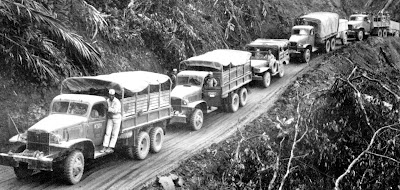
As the majority of hobby wargamers are ‘amateurs’, logistics tend not to be covered in most sets of wargame rules. My HEXBLITZ rules did include some simple logistic rules, but to be frank, they were probably too simple and certainly incomplete.
I recently decided to revisit and revise HEXBLITZ and writing a proper set of logistics rules was the first task I set myself. After a lot of thinking (and two days of writing later) I had a comprehensive set of logistics rules to include in the revised book ... but on re-reading them, I realised that I had designed a monster that only the most ardent wargaming accountant would have found even mildly interesting.
I had done something that all wargame designers need to be very wary of, and that is trying to write a set of rules or devise a mechanism that is so all-embracing that it ends up being too complex and/or too burdensome on the players and was therefore likely not to have been used.
On reflection, this particular 'horse' fell at the fence of 'Cordery’s Rule of Wargame Design', which states that 'If players consistently ignore a rule because it does not make sense or hinders the flow of the wargame, then the rule should be discarded. If players do not notice that it has gone, then it probably should not have been there in the first place.'
I have therefore gone back to the drawing board, slightly chastened and determined not to make this mistake again ... I hope!
* Bruce Catton, the well-known American Civil War historian, wrote in his book THE CIVIL WAR in 1971 that 'Do not, under any circumstances whatever, quote Forrest as saying 'fustest' and 'mostest'. He did not say it that way, and nobody who knows anything about him imagines that he did.'




.jpg)


