Pages

Thursday, 27 July 2023

The latest Military History Plus podcast

I managed to listen to the latest Military History Plus podcast yesterday whilst I was flocking some of my Eastern Front/Great Patriotic War collection.

This episode was entitled EXPLORING COMBAT MOTIVATION and featured an interview with Dr Tom Thorpe about his research and interest into combat motivation and resilience. The discussion covered what is meant by the term combat motivation and what factors are most important in ensuring that soldiers will fight. A range of factors were covered, including small group cohesion, ideology, and coercion.

I enjoyed this discussion, especially as it included the topic of what constitutes morale, something about which my views have changed over the years.

I highly recommend the Military History Plus podcasts. I urge my regular blog readers not to be put off by some of the negative reviews that seem to have been written by reviewers who didn’t quite understand the intended scope of the podcasts.


The Military History Plus podcasts take a deep dive into the fascinating world of conflict and its impact on various aspects of society. From the grand sweep of history to the intricate details of individual battles, the joint podcasters, Professor Gary Sheffield and Dr Spencer Jones will explore them all, including delving into the ways in which war has shaped art, literature, and even hobbies like wargaming and football.

Tuesday, 25 July 2023

The War Memorials Trust

Our local community centre (Shrewsbury House) hosts a weekly ‘get together’ on most Monday mornings. It’s aimed at retired people, and the programme includes a mixture of sessions, including ones about local history and charitable organisations.

Yesterday’s ‘get together’ featured a talk by the director of the War Memorials Trust, Frances Moreton. The trust was set up in 1997 thanks to the work done by ex-Royal Marine, Ian Davidson. The purpose of the trust was '… to educate the public and to foster patriotism and good citizenship by remembering those who have fallen in war by preserving and maintaining war memorials'.

The trust’s objectives are:

  • To improve the condition of war memorials, in their historic design and setting, to support their long-term preservation in-line with best conservation practice, sustainability and the challenges of climate change.
  • To increase the understanding of best conservation practice including how to maintain, protect, repair and conserve war memorials appropriately as well as raise awareness of the support available from War Memorials Trust.
  • To enhance public engagement with, and the recognition of local responsibility for, war memorials.
  • To sustain access to grant funding to support repair and conservation works in-line with best conservation practice.
  • To increase the money raised by the charity to deliver its vision to protect and conserve war memorials.

It gives match-funded grants to local communities who want to clean, conserve, and/or repair war memorials. It also has an online database of war memorials across the England, Scotland Wales, and Northern Ireland that shows their location on a map as well as photographs (where they exist) and a description of the memorial.

Monday, 24 July 2023

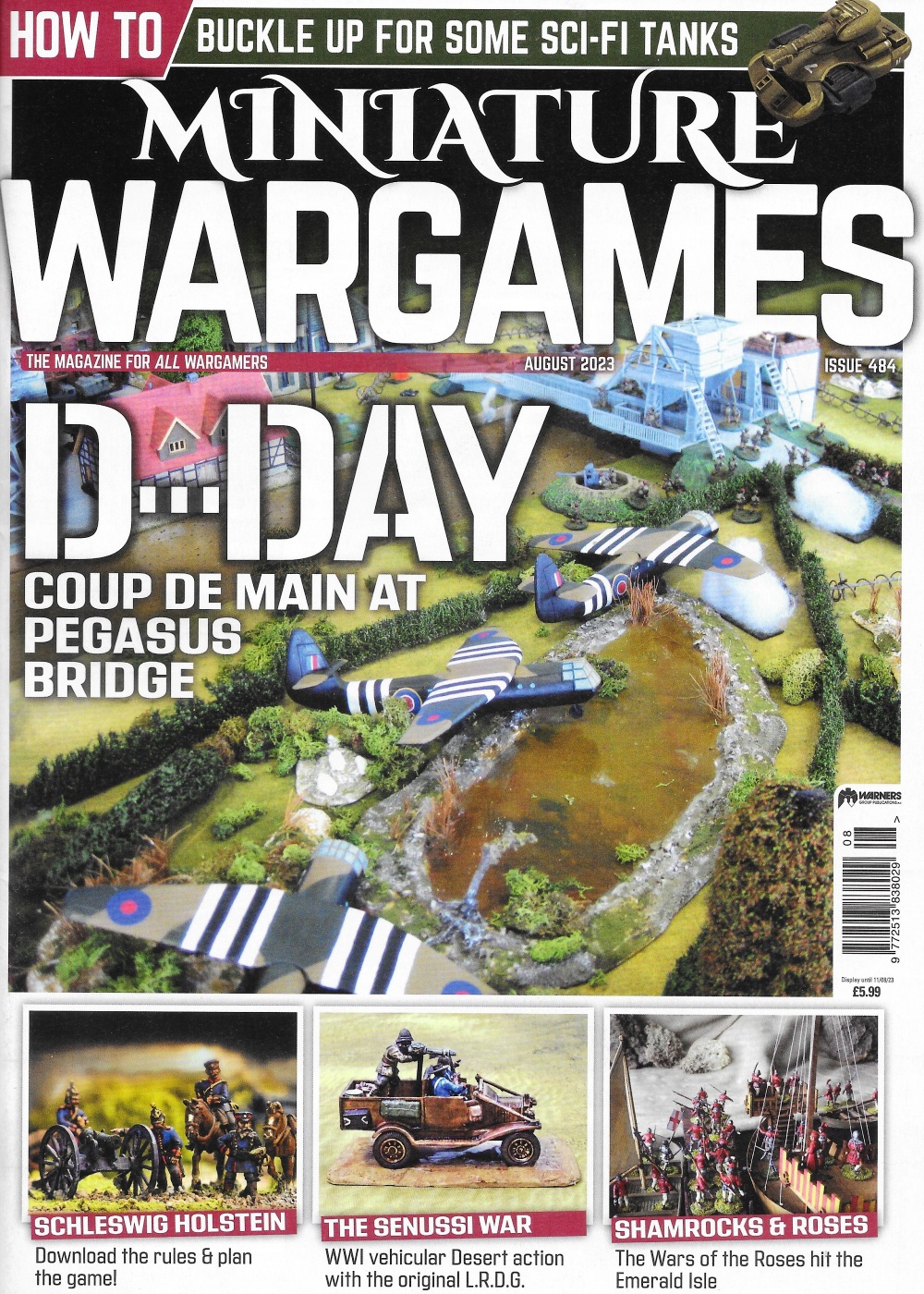
The latest issue of Miniature Wargames

During a recent visit to Bluewater with Sue, I happened to go into the centre’s branch of WHSmith and bought a copy of the latest issue of MINIATURE WARGAMES to read whilst she did her shopping in Boots, John Lewis, Marks & Spencer etc. (Bluewater has numerous places where one can sit whilst one’s ‘other half’ shops.)

It’s some time since I has bought a copy and there was no freebie to entice me to buy one, but I knew that reading it (or even just flipping through it) would easily fill the time I had to wait.

In my opinion, the stand-out articles in this issue were:

  • Conrad Kinch’s SEND THREE AND FOURPENCE: ALL THIS AND A WORLD WAR TOO, in which he examines the issues raised in a recent YouTube video from MIDWINTER MINIS that is entitled ‘The BIG PROBLEM with historical wargames’.
  • Jon Sutherland’s HAM & JAM: NORMANDY JUNE 6th 1944, which looks at how to recreate the glider-borne attacks on the bridges over the Caen Canal and Orne River.
  • Chris Swan’s THE FIRST L.R.D.G., which is about the Senussi Campaign that took place in Egypt from 1915 to 1917.
  • David Tuck’s SCHLESWIG HOLSTEIN, which is about wargaming the wars that took place in 1845 to 1851 and 1864.

There was lots for me to get my teeth into, and as several of the above were part one of a series, I’ll be looking out for next month’s issue.

Sunday, 23 July 2023

Phil Sabin’s latest air war games

Before he retired from King’s College, London, and moved abroad, Professor Phil Sabin was a relatively near-neighbour of mine. We often met and had a chat at a local wargame show, I visited his home and fought a wargame with him, and he regularly invited me to take part in wargame sessions (including Connections UK) at KCL.

One of his specialist areas of study was air warfare, and I was very interested to see that his latest games have been featured on his YouTube channel and the BoardGameGeek website.

The games are:

I have yet to try the latest versions of these games, but if past experience is anything to go by, they’ll be great wargames.

Friday, 21 July 2023

Flocking the bases of my World War Two collection: A progress report

I began flocking the bases of my 20mm World War Two collection with natural-coloured cork granules a few days ago, and so far I've completed about a third of them. I've not rushed to complete this task as I'm doing a bit of reorganisation as I proceed.

I estimate that it will take me another week or so to finish this, and by then I hope to have the first draft of the latest iteration of RED FLAGS & IRON CROSSES ready for some play-testing using the newly revitalised collection.

In the meantime, here are some more photographs of play-tests of the rules from 2008:

Wednesday, 19 July 2023

Looking back in order to go forward

COW2023 gave me the opportunity to take part in two World War 2 wargames: Tim Gow's LITTLE WORLD WARS and Chris Kemp's NQM: NOT QUITE MECHANISED. As a result, I've been thinking about the rules I want to use for my much-planned Eastern Front/Great Patriotic War project.

Coincidentally, during the conference I spoken to a wargamer who had play-tested the earlier version RED FLAGS & IRON CROSSES ... and that set me thinking about the World War 2 rules that I wrote before I began work on what became the PORTABLE WARGAME, RED FLAGS & IRON CROSSES: TARRED AND FEATHERSTONED. These were published as an appendix to John Curry's 2009 reprint of Donald Featherstone's WARGAMING AIRBORNE OPERATIONS. I still have the MS Word file containing the rules somewhere on my computer, and I hope to print off a copy in due course to see if there is some way that I can meld elements of it with elements of the PORTABLE WARGAME.

The following are some photographs of one of the play-test battles I fought using RED FLAGS & IRON CROSSES: TARRED AND FEATHERSTONED back in 2008.

Monday, 17 July 2023

Military History Plus podcasts

I spent a very productive time yesterday flocking some wargame figures and vehicles whilst listening to the excellent new Military History Plus podcasts that have been created by Dr Spencer Jones and Professor Gary Sheffield.

The first in the series included a brief introduction by the creators of the podcasts as well a discussion about what constitutes military history. I found this very interesting, and although I was brought up in the age when the so-called Victorian-style of military history predominated, my personal view that the study of the subject cannot be separated from – for example – social, political, and economic history seems to be in accord with those expressed by the podcast’s creators.

The second podcast was mainly taken up with an interview with Dr Sarah-Louise Miller, a historian specialising in the history of intelligence and espionage, and particularly the importance of women in these areas. There was also an interesting discussion about the relationship between academics who are seeking to make history more accessible and the mainstream media.

I thoroughly recommend this podcast to those of my regular blog readers who enjoy listening to wide ranging discussions about military history. I understand that the creators have already recorded a series of podcasts that will be released regularly, and I have bookmarked their website in my favourites so that I don’t miss any.

Sunday, 16 July 2023

I have been to ... the Prince Philip Maritime Collections Centre community day

Every year, the Prince Philip Maritime Collections Centre opens up its site for a community day. This gives them the opportunity to showcase the work that they do both at the centre and in the community, and this event took place on Saturday, starting at 10.30am.

Sue and I arrived just before the start, and after parking our car we went inside, registered that we were there, and signed up for two sessions. The first was a 'Behind the Scenes' tour that was concentrating on some of the toys and games in the museum's huge collection (the museum has over 2.5 million items of which 90% is in storage at any one time). This started at 11.00am after a short poetry recital by a local poet, Joel Sydenham.

After a short visit to the climate-controlled room in which the pastel drawings and paintings are kept, we passed on to the area where the uniforms and textiles are stored. There we saw:

  • An example of a tiny doll in the uniform of a Great War WREN (Women's Royal Naval Service).
  • The teddy bear (named Humphrey) that was taken around the world by Tracy Edwards when she led the all-female crew of the yacht Maiden during the 1990 Whitbread Round the World Race. (They came second in the race.)
  • A glove puppet of the Devil from a traditional Punch & Judy show.

The next stage of our tour took us to the 3D storage area, where we saw:

  • A whistle carried by a female passenger aboard the Titanic. (The passenger gave it to a crewman of the lifeboat she eventually boarded).
  • A board game named 'The sinking of the Titanic', which was produced by the Ideal Corporation in 1978. 
  • An eighteenth century jigsaw map of the World that was used to teach children.
  • A set of bone dominos in a bone and wooden box that was made by French prisoners of war during the Napoleonic Wars.

Once our tour was over, Sue and I took a break outside before visiting the Mystery Room. This contained a number of maritime artifacts that visitors were allowed to handle, and we were then encouraged to write a poem and to tell a story about what we had chosen to pick up by the poet who had given the recital earlier in the day.

We then had a walk through the garden that is maintained by local schoolchildren (with the aid of volunteers) before attending a short speech by the mayor (Councillor Dominic Mbang), who then made a number of presentations to volunteers and local young people who had taken part in projects at the Centre.

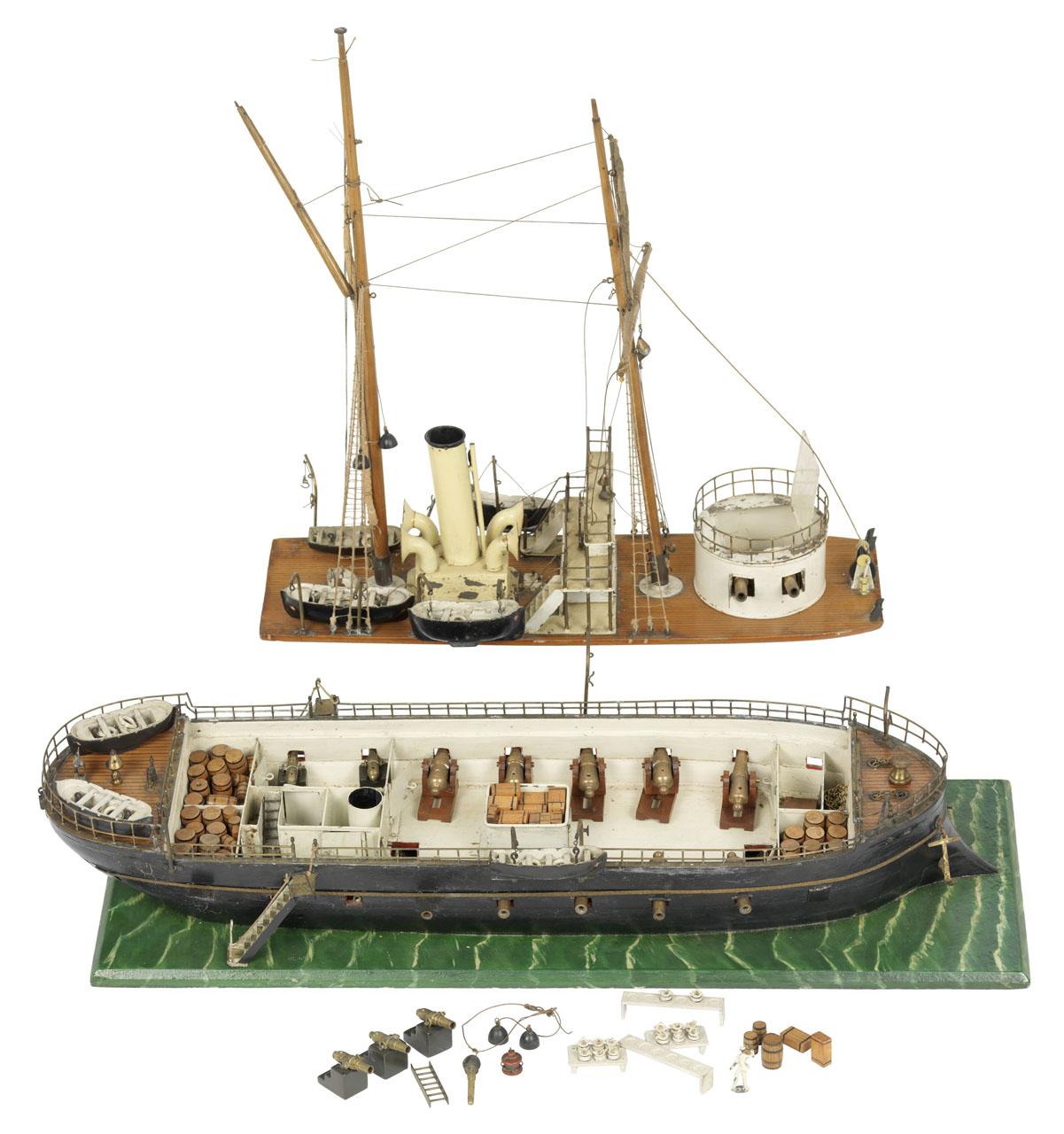
At 1.15pm Sue and I (along with several other people, including the mayor) went up to the Reseach Room to listen to a short talk Simon Stephens, the Curator of the Ship Model and Boat Collections. He talked briefly about the sheer range and size of ship models in the museum's collection and then gave us the opportunity to look at a late nineteenth century toy model of a turreted ironclad ram ... which has now become my favourite ship model!

People were still arriving when Sue and I left at 2.00pm, and it looked as if the day had been a very successful event. Our thanks go to Khursheed Hussain, the museum's Collections Engagement Producer, the staff of the museum who were on hand to talk to attendees, and the volunteers who made the whole event so memorable.

Saturday, 15 July 2023

Tintin en espagnole

 As I mentioned in my recent cruise blog post, whilst I was in Coruña I bought three Spanish-language editions of some Tintin books. They were LA OREJA ROTA (THE BROKEN EAR), ...

... EL CETRO DE OTTOKAR (KING OTTOKAR'S SCEPTRE), and ...

... EL ASUNTO TORNASOL (THE CALCULUS AFFAIR).

In the Spanish editions, Snowy is known as Milu (the French version of which [Milou] was also the name of Georges Remi/Hergé's first girlfriend!), Captain Haddock is Capitain Haddok, Thomson and Thompson are Hernandez and Fernandez, and Professor Calculus is Professor Tornasol (which is Spanish for litmus or sunflower).

Friday, 14 July 2023

To flock or not to flock, that was the question

Some time ago I mentioned in a blog post that I was considering flocking the bases of my Eastern Front/Great Patriotic War and Napoleonic collections with natural-coloured cork granules, and over the past few days I have been experimenting with some of the former to see what the end result would look like.

Figures and vehicles with green-painted bases looked like this ...

... and those with cork flocked bases looked like this.

In my opinion the results of this 'experiment' were pretty conclusive ... and it looks as if I'll be spending some time over the next few months flocking the bases of my existing Eastern Front/Great Patriotic War collection.

As to what I will do about my Napoleonic collection ... well, that remains to be decided.