Pages

Thursday, 16 August 2018

I have been to ... the Guernsey Occupation Museum

Besides the La Vallette Military Museum, Sue and I also spent time at the Guernsey Occupation Museum, Les Houards, Forest. The museum developed from the owner's personal collection of Occupation memorabilia, and was originally displayed in a small cottage adjoining his family's home. From these early beginnings in 1966, the museum has been extended and expanded. This expansion began in 1976 when the transport corridor and tea room were added, with the Occupation Street being added in 1987. The most recent extension took place in 2001 when displays and information about the Island's deportees to Germany was added.

When you arrive in the car park you are greeted by a German 88mm Anti-aircraft Gun ...


... and a French 105mm Coastal Defence Gun.


The entrance is 'guarded' by the turret of a French FT-17 Tank.


Amongst its collection, the museum has an interesting selection of German military vehicles, many of which are horse-drawn.


It also contains a recreation of the inside of a bunker with a Czech-built 47mm Fortress Anti-tank Gun.


The museum's collection also includes a large amount of German equipment.


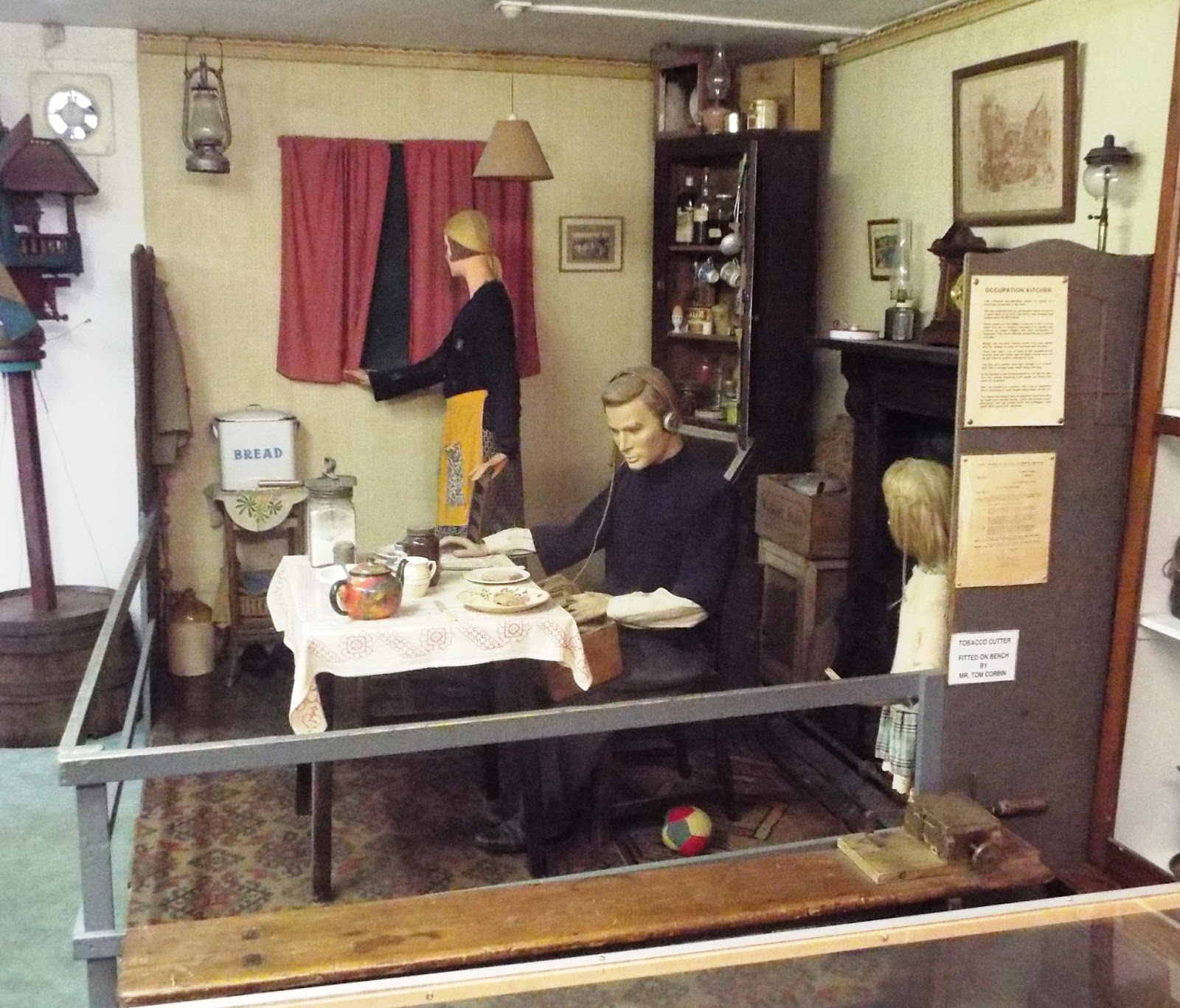
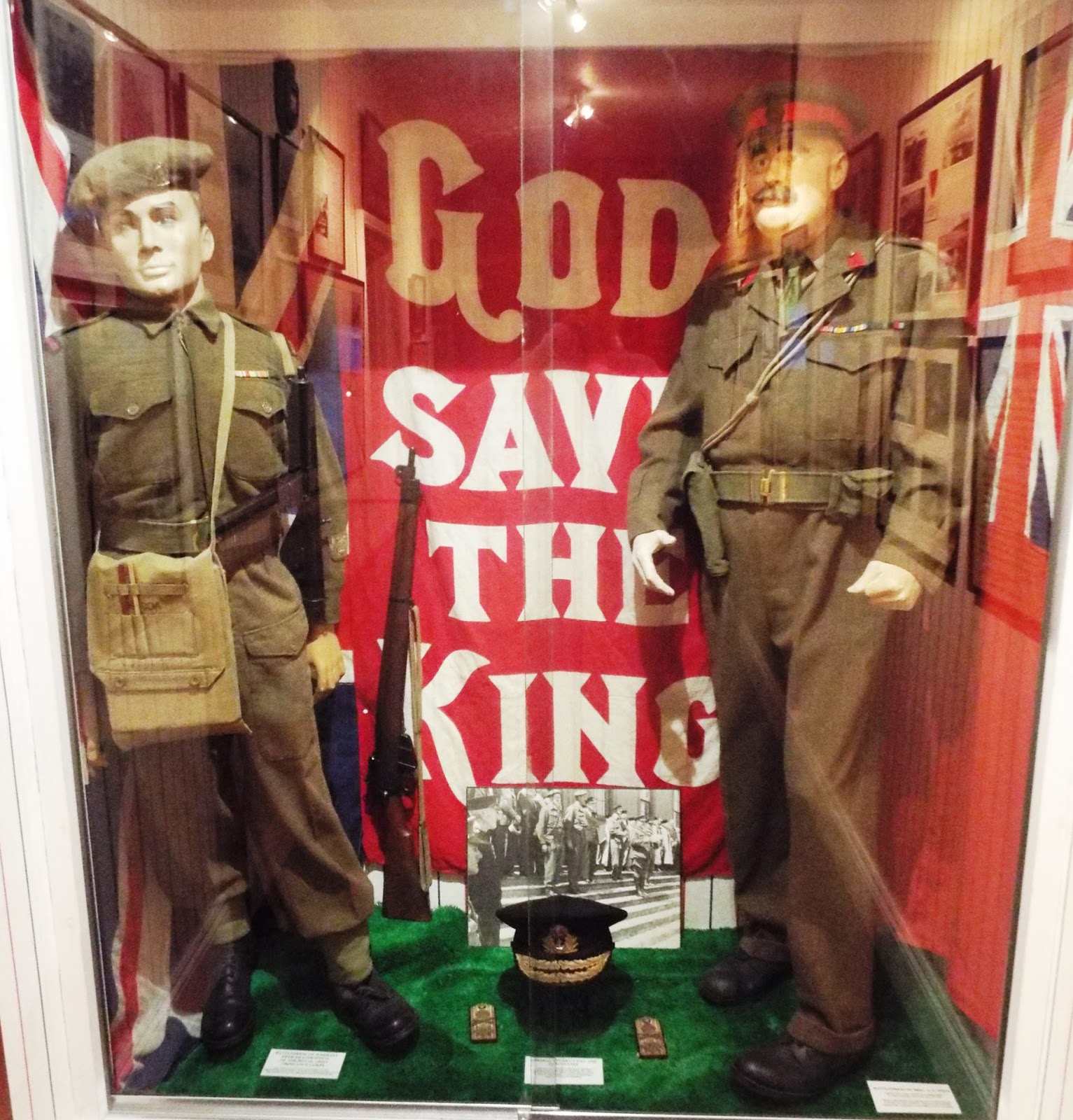
As one would expect there are a lot of exhibits that tell the story of life under German Occupation ...


... as well as the Liberation of the Channel Islands in 1945.


Wednesday, 15 August 2018

Flying Tiger magnetic sheet

As regular blog readers will already know, I'm always on the lookout for things that might be re-purposed for wargaming. On Monday, whilst visiting Maidstone in Kent, I came across something that certainly can be re-purposed ... A4-sized magnetic sheet.

I found this useful stuff in the local branch of 'Tiger'. ('Tiger' is the name used by the Danish 'Flying Tiger Copenhagen' chain of variety store or price point retail shops. They specialise in selling household accessories and toys, and the name 'Tiger' is thought to be derived from the Danish pronunciation of the word tiger, which sounds similar to the Danish word tier, a ten kroner coin. Ten kroner is worth approximately one pound (£1.00) and was the price charged for everything when the chain first started.)

When displayed in the shops, the A4-sized magnetic sheet could easily be mistaken for a very thin pad of pre-punched file paper with a marker pen ...


... but when turned over the magnetic sheet is very obvious.


The magnetic sheet seems to be powerful enough to hold a figure mounted on a steel washer or similar in place, but it is not so powerful as to make removing said figure difficult. At £2.00 per sheet it seemed like a bargain, and I have bought enough to line the bottom of some of my storage boxes.

Tuesday, 14 August 2018

What shtat to use?

The Russian word for staff or establishment when applied to a military organisation (i.e. the Table of Organisation and Equipment or TOE of a military formation) is штат, which when written in English script is shtat.

During the Great Patriotic War the Russian Army went through a number of different штат (or TOEs) for its military formations, with the result that Rifle Divisions could easily vary in size from 14,000 men to 6,000 men depending upon their location, time of formation, and exposure to combat. In some cases the actual (rather than the theoretical) strength of a Rifle Division could be much lower, especially after a period of combat.

So how does this affect my Thistlebarrow concept Rifle Divisions? I gave it some thought, and came up with the following examples:

Full-strength Rifle Division

  • In PORTABLE WARGAME terms, this Rifle Division would have a total of 32 SP
  • In HEXBLITZ terms, this Rifle Division would have a total of 17 SP and a Logistic capacity of 2 LOG
Medium-strength Rifle Division

  • In PORTABLE WARGAME terms, this Rifle Division would have a total of 27 SP
  • In HEXBLITZ terms, this Rifle Division would have a total of 13 SP and a Logistic capacity of 1 LOG
Low-strength Rifle Division

  • In PORTABLE WARGAME terms, this Rifle Division would have a total of 21 SP
  • In HEXBLITZ terms, this Rifle Division would have a total of 9 SP and a Logistic capacity of 1 LOG
These are just examples, but they have given me more options to consider as I develop my own version of the Thistlebarrow concept.

Monday, 13 August 2018

I have been to ... La Valette Underground Military Museum, Guernsey

During our most recent cruise, Sue and I visited La Valette Underground Military Museum on the outskirts of St Peter Port, Guernsey.

The museum is located in what was intended to be an underground fuel storage facility for U-Boats, but although the fuel tanks were installed, the tunnel complex was never completed. The excavation work was carried out by the Organization Todt using slave labour to do the majority of the heavy manual work.

The tunnels and their contents were left untouched for the first couple of years after the end of the Second World War, but in 1947 two of the three fuel storage tanks were removed. The site was then left untouched again until the early 1980s, when it was proposed to convert the tunnels into a museum. Once approval had been given, considerable work had to be done to ensure the tunnels were structurally safe and that the proposed museum met the current health and safety regulations. This work took two years, and the museum finally opened in August 1988.

As the following photographs show, the museum uses all the available space to tell the story of the German occupation of Guernsey as well as the part played by the people of the Island during the First and Second World Wars.


As will be obvious for these photographs, this is a relatively small museum that is crammed full of exhibits. We were only able to spend forty-five minutes there, but could easily have spent three or four time as long.

Sunday, 12 August 2018

Miniature Wargames Issue 425

The latest issue of Miniature Wargames arrived in the post on Friday, and I have spent the time since reading it.


The articles included in this issue are:
  • Welcome (i.e. the editorial) by John Treadaway
  • Forward observer
  • Send three and fourpence: Grappling with computers on the Toy Soldier Frontier: Part 1 of an interview with Arofan Gregory by Conrad Kinch
  • Kadesh 1274 BC: Egyptians vs. Hittites by Jon Sutherland, with photographs by Diane Sutherland
  • What a complete Tanker!: Fighting a historic and a film battle with the Lardy Rulesby Dave Tuck, with photographs by Malc Johnston
  • Siege Train Scenarios by John Treadaway
  • Darker Horizons
    • Fantasy Facts
    • By Crom!: A game for muscular heroes by Chris Swan
  • Getting out alive: A WW2 scenario with options by Jim Webster
  • Recce
  • New Residence: The continuing tales of a wargames widow by Diane Sutherland
  • Show Report: Six Appeal: the Editor attends Joy of Six 2018 by John Treadaway
  • Club Directory
So, what did I particularly enjoy in this issue? Much more than I expected!

Many, many years ago wrote a computer-aided naval wargame, which I demonstrated at Salute. It was written in BASIC using a Sinclair Spectrum 48kb computer, and I actually sold copies of the program to one or two people. Since then the world of computer-aided wargaming has come on leaps and bounds, and it was for this reason that I found the first part of Conrad Kinch's interview with Arofan Gregory interesting.

I also enjoyed reading Dave Tuck's What a complete Tanker! because I have yet to try the latest addition to the Two Fat Lardies stable and it gave me a flavour of how the rules work. John Treadaway's Siege Train Scenarios showed that a good scenario design can be adapted for pretty well any historical period, and Jim Webster's Getting out alive gave a few ideas that I might use in the future.

The biggest surprise was enjoying Chris Swan's By Crom!, which seemed to capture the essence of the Conan stories (of which I am a closet fan!) in a relatively simple game.

As far as I am concerned, this was a good issue ... and not just because Arthur Harman's review of THE MADASAHATTA CAMPAIGN and GRIDDED NAVAL WARGAMES were published in the Recce section!

Saturday, 11 August 2018

An idea that just would not go away

I finally decided to see if I could 'create' a World War II Russian Army along similar lines to Thistlebarrow's Napoleonic armies. The result looked like this:

  • An Army Commander
  • 1st Corps
    • Corps Commander
    • Artillery (one base with a heavy gun plus towing vehicle)
    • Four Rifle Divisions (each of four bases of infantry, some of which might be support weapons)
    • Medium Tank Brigade (one base of tanks)
  • 2nd Corps
    • Corps Commander
    • Artillery (one base with a heavy gun plus towing vehicle)
    • Four Rifle Divisions (each of four bases of infantry, some of which might be support weapons)
    • Medium Tank Brigade (one base of tanks)
  • 3rd Corps
    • Corps Commander
    • Artillery (one base with a heavy gun plus towing vehicle)
    • Two Naval Infantry Brigades (each of four bases of Naval infantry, one of which is a support weapon)
    • Two Rifle Divisions (each of four bases of infantry, some of which might be support weapons)
    • Medium Tank Brigade (one base of tanks)
  • 4th Corps
    • Corps Commander
    • Four Rifle Divisions (each of four bases of infantry, some of which might be support weapons)
    • Light Tank Brigade (one base of light tanks)
  • Cavalry/Mechanised Corps
    • Corps Commander
    • Two Medium Tank Brigades (each of one base of tanks)
    • Two Cavalry Regiments (each of one base of cavalry)
    • Motorised Rifle Division (four bases of infantry with trucks [The latter are not shown in the photograph])
No logistics 'tail' is shown above, but I have plenty of suitable trucks and wagons that I could include.

The above is a rather rough-and-ready attempt to see if the concept works. It will not please everyone, but it works for me although I think that it needs a bit more tinkering before I want to take it fully on board.